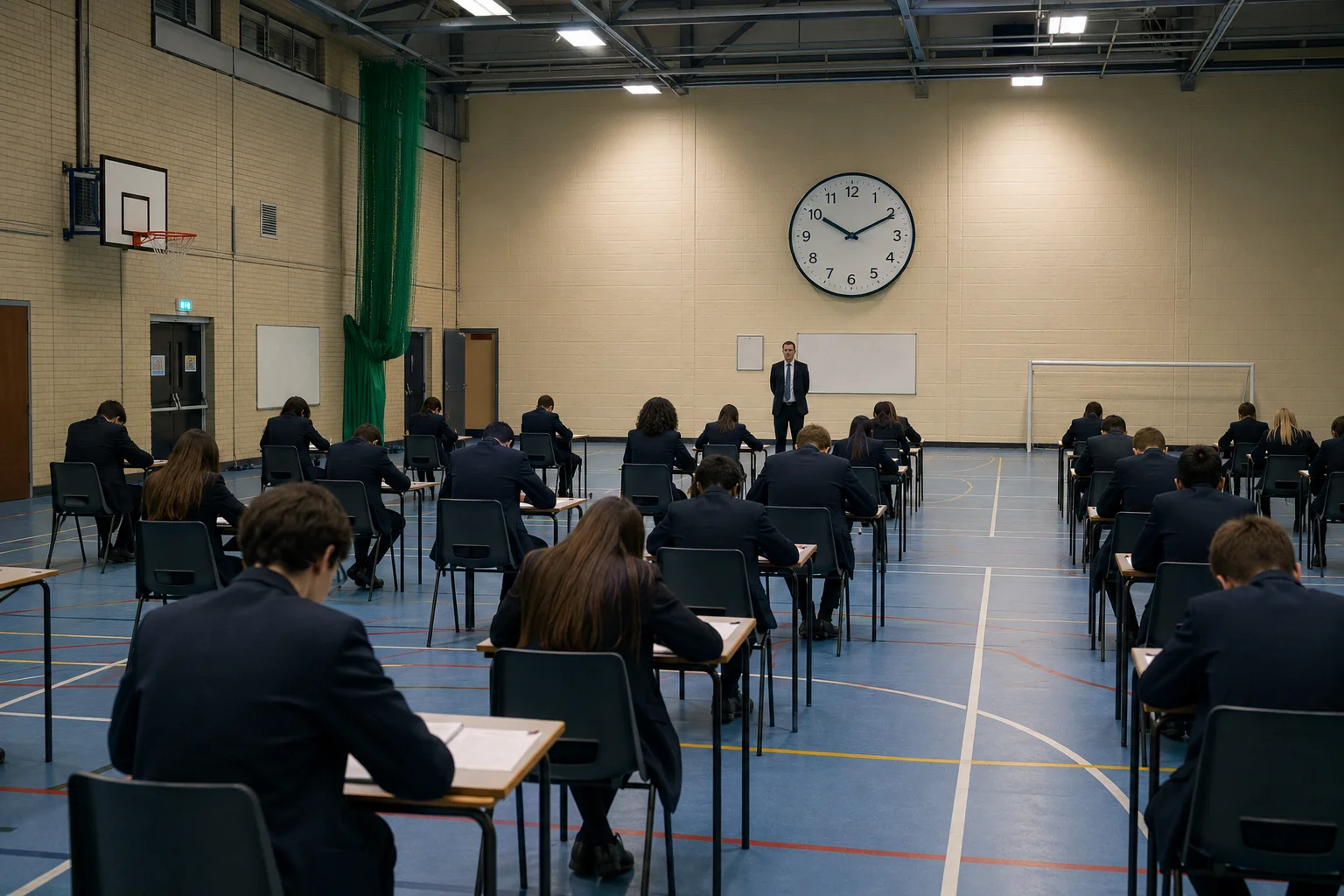
At the end of Year 11, every student in England faces one of the most consequential decisions of their school career: which post-16 pathway to pursue. The choice — often framed as A-Levels versus "something else" — is far more nuanced than that simple binary suggests. In 2026, students have three principal academic-vocational pathways available to them, each with distinct structures, assessment models, and implications for university and employment. This guide explains each pathway honestly and helps families make an informed decision based on their young person's individual strengths and ambitions.
📌 Did You Know?
T-Levels were introduced by the UK government in 2020 as a direct equivalent to A-Levels — worth 168 UCAS points (equivalent to 3 A-Levels at grade A*) — yet as of 2026, fewer than 15% of Year 11 students are aware of what a T-Level actually involves. This knowledge gap is actively costing students the chance to take a pathway that may be a better fit for them.
A-Levels: The Traditional Academic Route
A-Levels (Advanced Level qualifications) have been the dominant post-16 pathway in England for over 60 years. Students typically study 3 subjects across two years (Year 12 and Year 13), assessed primarily through terminal written examinations at the end of Year 13.
Who A-Levels suit best
- Students who thrive in written examination conditions
- Those who have a clear subject passion and want to study it in depth
- Pupils whose university aspirations require specific A-Level subject combinations (e.g., medicine requires Biology and Chemistry; law benefits from History or English)
- Strong independent learners who can manage the significant self-study demands of sixth form
A-Level grades and UCAS points
| A-Level Grade | UCAS Points (per subject) |
|---|---|
| A* | 56 |
| A | 48 |
| B | 40 |
| C | 32 |
| D | 24 |
| E | 16 |
Key considerations for A-Levels
- Very high stakes: almost all assessment concentrated into final exams — a bad exam day has significant consequences
- The coursework (non-exam assessment) element has been reduced in most subjects since 2015 reforms
- Most Russell Group universities specify A-Level requirements for competitive courses
- The Extended Project Qualification (EPQ) can supplement A-Levels with an independent research project worth up to 28 UCAS points
BTECs: Applied and Vocational Learning
BTECs (Business and Technology Education Council qualifications) are vocational qualifications offered at multiple levels. At Level 3 (equivalent to A-Levels), BTECs are typically taken as:
- BTEC National Extended Diploma — equivalent to 3 A-Levels, taken over 2 years, often full-time
- BTEC National Diploma — equivalent to 2 A-Levels
- BTEC National Certificate — equivalent to 1 A-Level
BTECs are assessed primarily through coursework, assignments, and practical projects — with a smaller proportion of written external assessment. This suits students who demonstrate their knowledge more effectively through applied tasks than written exams.
Who BTECs suit best
- Students with a clear vocational interest (e.g., health and social care, business, media, sport, engineering, IT, performing arts)
- Those who work better through coursework and ongoing assessment rather than high-stakes exams
- Pupils who want to keep options open between university and direct employment/apprenticeships
- Students who benefit from structured assignment deadlines rather than self-directed revision
💡 Tip for Parents
A common misconception is that BTECs are not accepted by universities. In 2026, the overwhelming majority of universities — including many Russell Group institutions — accept BTEC qualifications for appropriate courses. However, course-specific entry requirements vary significantly. Always check UCAS course entry requirements directly for the specific university and subject your child is interested in before assuming a BTEC route is or isn't viable.
T-Levels: The New Technical Route
T-Levels are a relatively new qualification introduced from 2020, designed as a rigorous technical alternative to A-Levels with strong employer involvement. A full T-Level programme includes:
- Technical qualification component — assessed through knowledge tests, employer-set projects, and an occupational specialism
- Industry placement — a minimum of 315 hours (approximately 45 days) with a real employer, which is mandatory and integrated into the qualification
- Maths and English — students who haven't achieved Grade 4 in GCSE Maths and/or English must continue studying them
T-Level pathways available in 2026
T-Levels currently available (or being phased in) include pathways in:
- Digital Production, Design and Development
- Education and Early Years
- Health and Science
- Construction and the Built Environment
- Engineering and Manufacturing
- Business and Administration
- Creative and Design
- Legal, Finance and Accounting
- Agriculture, Land Management and Production
Who T-Levels suit best
- Students with a clear sector interest that aligns with an available T-Level pathway
- Those who want significant real-world work experience as part of their qualification
- Pupils considering a degree apprenticeship or higher technical qualifier after sixth form
- Strong students who want the UCAS points of 3 A-Levels combined with vocational credibility
⭐ Key Takeaway
No pathway is inherently superior. A-Levels, BTECs, and T-Levels are designed for different learner profiles and different aspirations. The best choice is the one that aligns with your young person's learning style, subject interests, and post-18 goals — not the one that carries the most social prestige at your school's sixth form open evening.
A-Levels vs. BTECs vs. T-Levels: Side-by-Side Comparison
| Feature | A-Levels | BTECs | T-Levels |
|---|---|---|---|
| Assessment style | Mainly exams | Mainly coursework | Mixed + placement |
| Duration | 2 years | 1–2 years | 2 years |
| Industry placement | No | Optional | Yes — mandatory (315+ hrs) |
| University recognition | Universal | Widely accepted | Accepted, growing |
| UCAS points (max full) | 168 (3×A*) | 168 (Ext. Diploma D*D*D*) | 168 (Distinction*) |
| Best destination | University / any | University / employment | University / Higher Technical / Apprenticeship |
Can You Mix and Match?
Yes — and many sixth forms actively encourage this. Common combinations include:
- 2 A-Levels + 1 BTEC certificate (e.g., A-Level Biology, A-Level Psychology + BTEC Health and Social Care)
- 3 A-Levels + Extended Project Qualification (EPQ)
- Full BTEC Extended Diploma alongside a standalone A-Level (e.g., BTEC Business + A-Level Maths)
T-Levels, however, are generally full-time programmes that cannot easily be combined with A-Levels due to the time commitment of the industry placement component.
Summary
England's post-16 landscape in 2026 is genuinely pluralistic — and that is a strength. A-Levels remain the gold standard for university pathways requiring specific academic subjects. BTECs provide a coursework-based route with strong vocational relevance and broad university acceptance. T-Levels offer an ambitious new technical alternative with real-world credentials baked in. The most important conversation any family can have is an honest one: what kind of learner is your teenager, what excites them, and where do they want to be in five years? The right answer to those questions should determine the pathway — not convention.