England's schools are among the most linguistically diverse in the world. In many inner-city primary and secondary schools, pupils speak over 40 different home languages; across the country as a whole, more than 20% of state school pupils are recorded as speaking English as an Additional Language (EAL). Whether you are a newly arrived family whose child has little or no English, or a settled family whose child is proficient in English but uses another language at home, understanding how England's schools support EAL learners is essential.
This guide explains how EAL provision works in English state schools, what your child is entitled to, how progress is assessed, and how you can support your child's language development at home — in both English and your family's home language.
According to the Department for Education's 2024 School Census, approximately 1.7 million pupils in England's state schools speak English as an additional language — roughly 21% of all pupils. The most widely spoken home languages after English are Punjabi, Urdu, Polish, Arabic, Bengali, and Romanian.
What Does EAL Mean in English Schools?
A pupil is recorded as EAL if their home language — or one of their home languages — is not English. The EAL designation covers an enormous range of proficiency levels:
- Children who have just arrived in England with no English at all
- Children who are developing English fluency and need ongoing language support
- Children who are highly fluent in English but use a different language at home
- Children who were born in England to non-English-speaking families and are fully bilingual
EAL is not a special educational need. A child who is learning English as an additional language is not, by definition, a pupil with SEND (Special Educational Needs and Disabilities). The distinction matters — EAL provision sits within mainstream school practice, not within the SEND framework, though some EAL pupils will also have SEND needs that are addressed separately.
What Support Are EAL Pupils Entitled To?
There is no single statutory entitlement that specifies exactly what EAL support every school must provide. Instead, schools receive additional funding through the Pupil Premium and, in many cases, through English as an Additional Language (EAL) weighting in the National Funding Formula, and are expected to use this to meet the needs of EAL learners effectively. Ofsted inspects how well schools support EAL pupils as part of its assessment of a school's quality of education.
What Good EAL Provision Looks Like
The best EAL practice in English schools typically includes:
- Initial assessment: Assessing a new pupil's English proficiency on arrival using a recognised framework (most commonly the Bell Foundation's EAL Assessment Framework or a similar LA-approved tool)
- Induction support: A structured welcome period — often involving a bilingual buddy, translated materials, and introductions to key staff
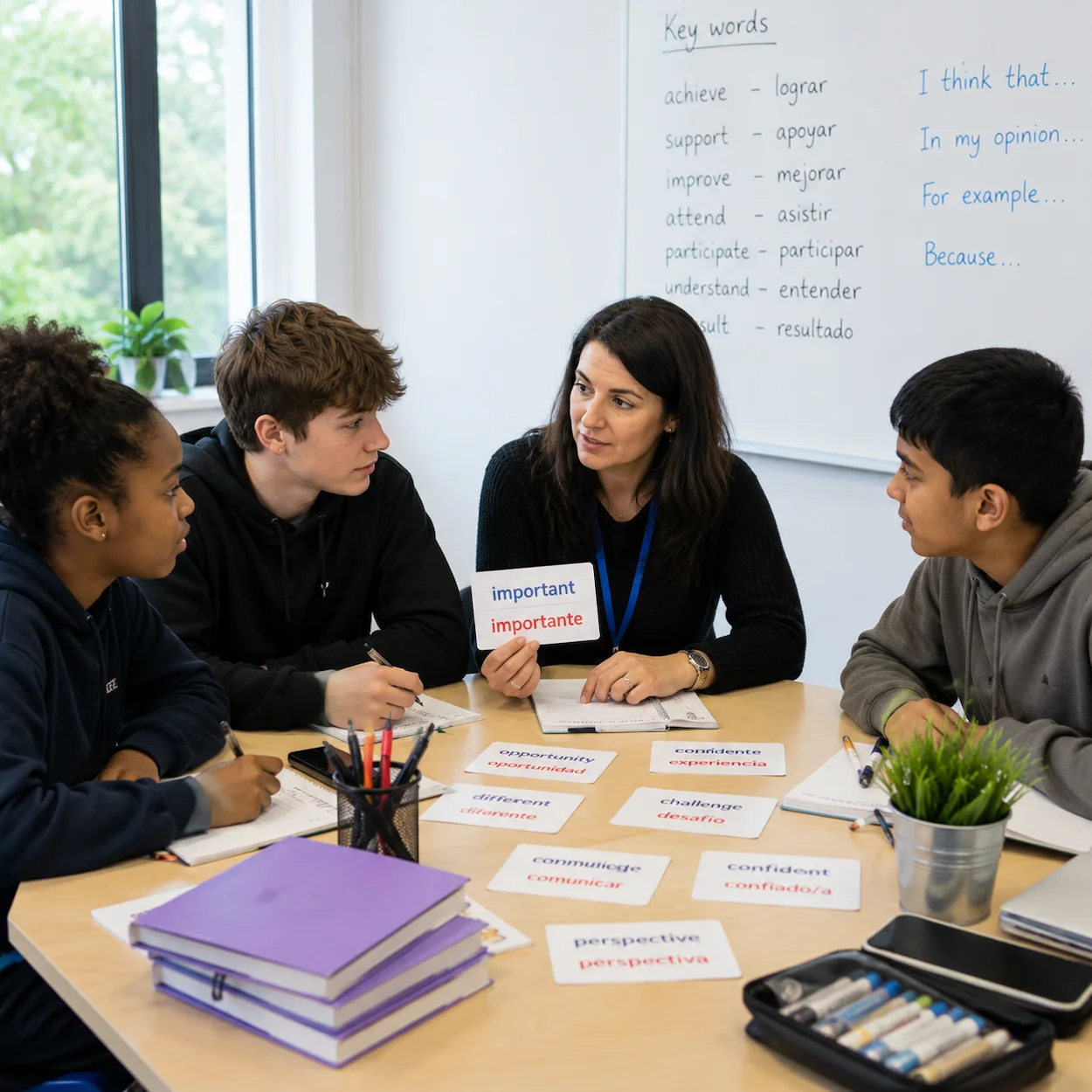
- Targeted language support: Small-group or one-to-one sessions with a trained EAL teacher or teaching assistant focusing on academic English vocabulary and literacy
- Scaffolded classroom teaching: Subject teachers adapting their lessons with visual supports, simplified written instructions, pre-taught vocabulary, and structured speaking frames
- Regular progress monitoring: Tracking EAL pupils' language development alongside their academic progress
- Home–school communication in home languages: Key correspondence translated where possible; access to interpreters for parents' evenings and important meetings
When your child starts at an English school, ask the school to explain their EAL assessment process and what support will be put in place. You have the right to know how your child's English level has been assessed and what the school's plan is for developing their language. Ask for a named contact — often an EAL coordinator or SENCO — who you can speak to about your child's progress.

How Is EAL Proficiency Assessed?
Most English schools use a proficiency scale to track EAL pupils' language development over time. The most widely used framework is the Bell Foundation EAL Assessment Framework, which describes five stages of English language development:
| Stage | Label | Typical Characteristics |
|---|---|---|
| A | New to English | Little or no English; relies on gestures, images, home language; silent period common |
| B | Early Acquisition | Single words and simple phrases; understands familiar classroom language; reads simple texts with support |
| C | Developing Competence | Communicates in sentences; growing vocabulary; beginning to access curriculum with support |
| D | Becoming Competent | Engages with most curriculum areas independently; academic writing developing; peer interaction in English |
| E | Competent | Operates fully in English across the curriculum; language development continues but no longer a barrier to learning |
The time it takes a pupil to progress through these stages varies enormously depending on age at arrival, prior education, home language literacy, and how much English they encounter outside school. Research suggests that conversational fluency (Stage C–D) typically develops within 2–3 years, while academic language proficiency (Stage E) often takes 5–7 years to fully develop.
EAL in Primary vs Secondary Schools
Primary Schools
Young children (Reception to Year 6) are generally remarkable language acquirers — immersive classroom environments, play-based learning, and the social pressure to communicate with peers accelerate English development significantly. Many children who arrive at primary school with no English develop strong conversational fluency within 12–18 months. Schools typically provide more intensive support in the early years, including small-group language sessions and buddy systems, tapering as proficiency grows.
Secondary Schools
EAL in secondary is considerably more complex. Pupils arriving at secondary age with limited English face the simultaneous challenge of learning English and accessing a demanding, subject-specialist curriculum in 10+ subjects. Academic language — the technical vocabulary, complex sentence structures, and abstract concepts of GCSE-level content — takes longer to acquire than conversational English and requires explicit teaching across all subjects.
Secondary schools with effective EAL provision invest significantly in subject teacher training — helping all teachers, not just the EAL specialist, to make their subject accessible to developing English speakers. For parents of secondary-age EAL pupils, it is particularly important to ask what support is provided within individual subjects, not just in separate EAL sessions.
EAL pupils who receive good in-class support across all subjects — not just in isolated EAL sessions — make significantly faster progress. If your child's school only offers separate EAL withdrawal sessions with no adaptation in mainstream lessons, it is worth asking the EAL coordinator how subject teachers are supported to help EAL learners within their own classrooms.
Supporting Your EAL Child at Home
One of the most common — and damaging — pieces of advice given to families of EAL pupils is to "only speak English at home". This advice is not supported by research and actively undermines children's cognitive and linguistic development.
Keep the Home Language Strong
A child's home language is a cognitive asset, not a barrier. Research in bilingualism consistently shows that strong home language literacy correlates positively with English language acquisition — not negatively. Children who can read and write confidently in their home language transfer those literacy skills to English far more readily than those who are not fully literate in any language. Continue reading, storytelling, and meaningful conversation in your home language.
Practical Ways to Support English Development
- Read together in English — school reading books, children's non-fiction, library books; discuss what you read together, even if you use the home language for discussion
- Encourage watching English-language TV and online content with subtitles — exposure to natural spoken English in context accelerates vocabulary acquisition
- Praise and encourage English at home — celebrate new words, correct gently and positively, never shame mistakes
- Ask the school for bilingual glossaries of key subject vocabulary — many schools and publishers produce these for major subjects at GCSE level
- Attend all parents' evenings and request an interpreter if needed — schools are expected to facilitate this
Exams and EAL Pupils
EAL pupils who are not yet fully proficient in English may be entitled to certain access arrangements in public examinations — most commonly a bilingual dictionary (for certain GCSE subjects) or in some cases extra time, if it can be demonstrated that language proficiency is significantly impacting their ability to access the assessment. These arrangements must be applied for through the school's exams officer and assessed by the SENCO or EAL coordinator. They are not automatic — families should ask explicitly whether their child has been assessed for access arrangements as GCSE year approaches.
Frequently Asked Questions
My child speaks English confidently at school — why are they still recorded as EAL?
The EAL designation is based on home language, not proficiency. A child remains recorded as EAL throughout their school career regardless of how fluent in English they become. This data helps the DfE and schools track outcomes for this group and ensures the funding formula reflects linguistic diversity in each school. It carries no stigma and does not mean your child will receive unwanted support.
Can my child take GCSE exams in their home language?
Most GCSE subjects are examined in English only. However, pupils can take GCSE or A-Level qualifications in their home language as an additional subject — GCSEs are available in many languages including Urdu, Polish, Arabic, Bengali, Panjabi, Turkish, and others. This can be a significant academic achievement and a valuable qualification. Ask the school whether they offer the relevant language GCSE or whether a pupil can be entered as a private candidate through an exam centre.
What if I feel the school is not providing adequate EAL support?
Start by raising your concern with the class teacher or the school's named EAL coordinator. If you are not satisfied with the response, escalate to the headteacher in writing. If the issue remains unresolved, you can contact the local authority's EAL advisory service, which most LAs in England operate, or seek advice from the NALDIC (the National subject association for EAL). Ofsted also takes EAL provision seriously — schools that fail EAL pupils adequately risk criticism in their inspection reports. For more on how special educational needs and additional support work in English schools, see our guide to SEND Support and EHCPs in England.