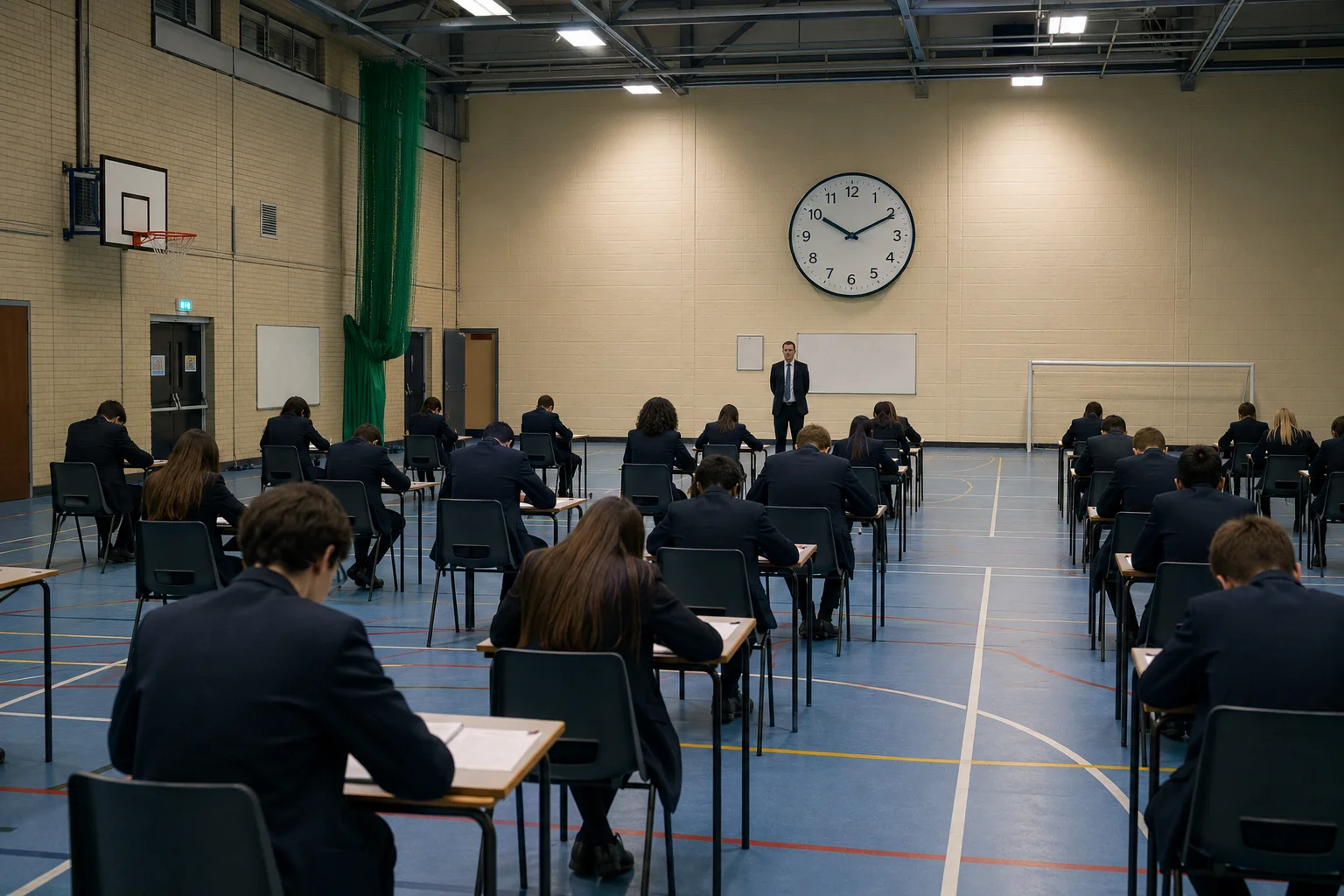
Choosing your GCSEs is one of the most important decisions you will make in secondary school. Get it right, and you open doors to the subjects you love, the A-Levels you want, and the career you are aiming for. Get it wrong, and you could spend two years studying subjects you dislike — or find yourself locked out of a university course later on. This guide gives you everything you need to make a confident, well-informed choice.
What Are GCSE Options?
GCSEs (General Certificates of Secondary Education) are qualifications taken in Years 10 and 11, typically between the ages of 14 and 16. Most students sit between 8 and 10 GCSEs in total.
Some subjects are compulsory — every student must take them regardless of their interests. Others are optional, giving you the freedom to shape your own timetable based on your strengths, interests, and ambitions.
When Do You Choose Your GCSEs?
The GCSE options process usually takes place in Year 9 (ages 13–14), during the spring term. Most schools hold options evenings where you can speak to subject teachers and get advice from your form tutor or head of year. You typically submit your choices by Easter, ready to start your GCSE courses in September of Year 10.
Core (Compulsory) vs Optional Subjects
Before you worry about choices, it helps to know which subjects are already decided for you.
| Subject | Status | Why It Matters |
|---|---|---|
| English Language | ✅ Compulsory | Required by virtually all employers and universities |
| English Literature | ✅ Compulsory (most schools) | Develops analytical and writing skills |
| Mathematics | ✅ Compulsory | Essential for science, engineering, finance and more |
| Science | ✅ Compulsory (Combined or Triple) | Foundation for STEM careers and many degree courses |
| Religious Education / PSHE | ⚠️ Often compulsory (varies by school) | Statutory requirement in many state schools |
| PE (theory element) | ⚠️ Compulsory in many schools | Statutory for KS4 though not always examined |
| Optional subjects | 🔵 Your choice | Typically 3–5 subjects from a menu of 20–30 options |
How to Choose the Right GCSE Subjects
With up to 5 optional subjects to pick, the pressure can feel overwhelming. Here are the most important factors to weigh up:
1. Play to Your Strengths
GCSEs are assessed through exams and coursework over two years. If you are genuinely good at a subject, you are far more likely to enjoy it and achieve a strong grade. Look at your end-of-Year 9 reports — what subjects have your teachers been most positive about?
2. Think About Your Future A-Level and Career Plans
Even if you don't have a firm career in mind (and most 14-year-olds don't), some degree courses and apprenticeships require specific GCSEs at Grade 4 or above. For example:
- Medicine or Nursing: Biology and Chemistry at GCSE (or Triple Science) is strongly recommended
- Law: History or English Literature develops the essay skills you'll need
- Engineering: Physics and Maths GCSE are often required
- Architecture: Art and Design alongside Maths is a strong combination
- Languages degrees: A GCSE in at least one modern foreign language is usually expected
3. Talk to Your Subject Teachers
Teachers can give you an honest, personalised assessment of whether their subject would suit you. Don't be afraid to book a conversation with the teacher of a subject you are considering — ask what Year 10 and 11 work looks like, how it is assessed, and whether students with your current level of ability tend to thrive in it.
4. Don't Just Follow Your Friends
One of the most common — and regretted — mistakes is choosing a subject because your best friend is taking it. You may end up in different sets anyway, and two years is a long time to spend studying something you have no interest in.
5. Research University Entry Requirements Early
Even at Year 9 it's worth looking up the entry requirements for courses that interest you. Most university websites list GCSE grade requirements for competitive programmes. This can help you avoid accidentally closing off an important door.
The EBacc — Should You Consider It?
The English Baccalaureate (EBacc) is not a qualification in itself — it is a government-endorsed combination of GCSE subjects that the DfE believes gives students the best foundation. To achieve the EBacc, a student must take GCSEs in:
- English Language and English Literature
- Mathematics
- Two or three Sciences (Combined or Triple)
- A Humanity (History or Geography)
- A Modern or Ancient Language (e.g. French, Spanish, German, Latin)
The government's ambition is for 90% of Year 10 pupils to study the EBacc combination by 2025. While it is not compulsory, many state schools actively encourage it. It signals academic breadth to sixth forms, colleges and universities.
However, if your strengths lie in creative or technical subjects (Art, Music, Drama, DT, Computing), don't feel forced into a rigid EBacc path if it doesn't reflect your talents.
GCSE Subject Combinations That Work Well Together
Here are some popular and effective subject combinations for different interests:
| Interest / Direction | Recommended Optional GCSEs |
|---|---|
| 🔬 Sciences / Medicine | Triple Science, Maths (already core), Geography or Biology extension |
| ⚖️ Law / Social Sciences | History, Sociology, English Literature, a Modern Language |
| 🎨 Creative Arts | Art & Design, Drama, Music, Photography, Media Studies |
| 💻 Technology / Computing | Computer Science, Design & Technology, Physics, Maths |
| 🌍 Business / Economics | Business Studies, Geography, Maths, a Modern Language |
| 🏥 Health & Care | Biology, Chemistry, PE, Psychology or Sociology |
| 📚 Humanities | History, Geography, Religious Studies, a Modern Language |
Common Mistakes Year 9 Students Make
- Choosing a subject because of the teacher, not the content — teachers change, but your grade doesn't
- Ignoring workload — some subjects like History and English Literature involve heavy essay writing; stacking too many essay subjects can be exhausting
- Underestimating Drama, Music or PE — these are rigorous academic GCSEs and are valued by universities for the skills they demonstrate
- Not checking if Triple Science is available — if you want to do A-Level Biology, Chemistry or Physics, Triple Science GCSE is almost always required or strongly preferred
- Overlooking Computer Science — even if you don't want to be a programmer, computing skills are valued across almost every industry
Questions to Ask Yourself Before Choosing
- Which subjects do I currently get the best results in?
- Which subjects do I actively enjoy going to — not just tolerate?
- Do I have any early career ideas that point towards specific subjects?
- What A-Levels might I want to take, and what GCSEs do those require?
- Am I choosing this subject because it genuinely interests me, or for the wrong reasons?
- Have I spoken to a teacher or careers adviser about my choices?
- Am I keeping my options as open as possible, or unnecessarily narrowing them?
Useful Tools and Resources
If you're weighing up school options or planning for secondary school choices, these tools on our site may help:
- 🔍 School Finder Wizard — find secondary schools that match your priorities
- 📊 Compare Schools — compare performance data between schools in your area
- 🗺️ School Catchment Checker — check which schools you are in the catchment area for
Frequently Asked Questions
Can I change my GCSE options after I've chosen?
Most schools allow limited changes in the first few weeks of Year 10, before courses get too far underway. After that, switching becomes very difficult. This is why it's crucial to think carefully before submitting your choices.
How many GCSEs should I take?
Between 8 and 10 GCSEs is the typical range. Taking more than 10 rarely provides an advantage and risks spreading your effort too thinly. Quality of grades matters far more than quantity of subjects.
Do employers care which GCSEs you took?
Most employers focus on Maths and English grades above all else. However, for specialist careers (medicine, engineering, law, computing), the specific subjects you studied can matter. Always check the requirements of the career or course you're targeting.
What if my school doesn't offer the subject I want?
Some students take GCSEs privately through online providers or local colleges. Speak to your school's SENCO or options coordinator — there are often more flexible arrangements than students realise.
Is it too early to think about university at Year 9?
It's never too early to be aware of what different courses require. You don't need a firm plan, but ruling out degree routes by not taking the right GCSEs is a mistake that's hard to reverse.