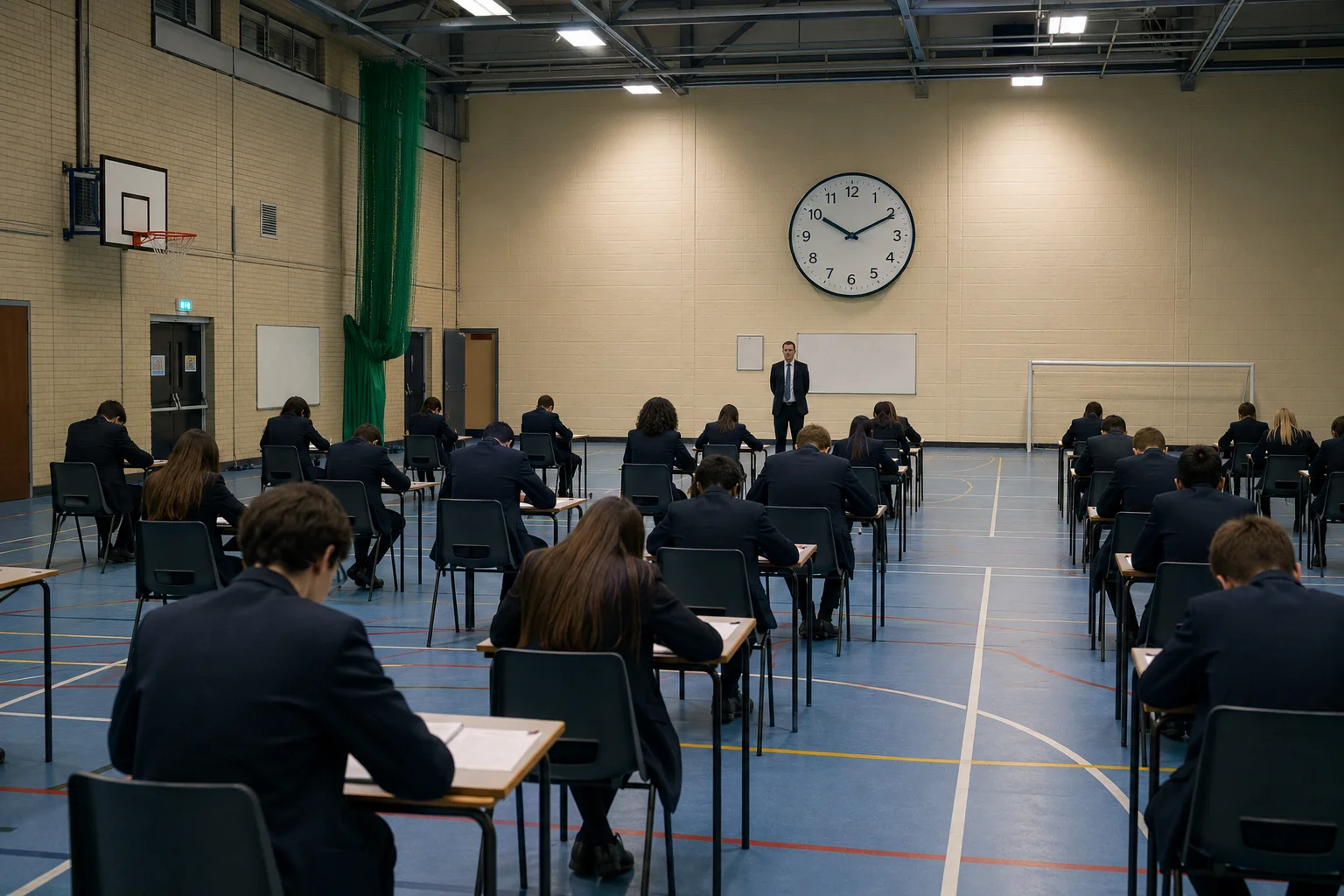
If your child is in Year 2 or Year 6, you've probably heard the word "SATs" mentioned by teachers, other parents, or even your child themselves. But what exactly are SATs, why do schools use them, and should you be worried? This guide answers every question parents typically have — clearly and without jargon.
What Are SATs?
SATs (Standard Assessment Tests) are national tests taken by pupils in state primary schools in England. They are set and marked by the Standards and Testing Agency (STA), an executive agency of the Department for Education.
There are two main SATs assessment points:
- End of Key Stage 1 (Year 2) — typically age 6–7
- End of Key Stage 2 (Year 6) — typically age 10–11
SATs are not taken by pupils in independent schools, academies that have opted out, or those in Wales, Scotland, or Northern Ireland (which use their own assessment frameworks).
Year 2 SATs (Key Stage 1)
Key Stage 1 (KS1) SATs assess children at the end of Year 2. Since 2023, schools are no longer required to administer the external KS1 tests, but teacher assessment remains statutory. Most schools still run the tests to inform their own judgement.
What Subjects Are Tested?
| Subject | Format | Duration |
|---|---|---|
| Reading | Two papers (fiction & non-fiction passages) | ~30 min each |
| Maths | Paper 1 (arithmetic) & Paper 2 (reasoning) | ~20 min each |
| Writing | Teacher assessment only (no formal test) | Ongoing |
| Science | Teacher assessment only | Ongoing |
How Are Results Reported?
KS1 results are reported as teacher assessment judgements against three standards:
- Working Towards the Expected Standard
- Working at the Expected Standard
- Working at Greater Depth
These are shared with parents in the end-of-year report and passed to the child's secondary school as part of their academic record.
Year 6 SATs (Key Stage 2)
Key Stage 2 (KS2) SATs are the main event that most parents think of when they hear "SATs." They take place every year in May (usually the second week) and are sat by all Year 6 pupils in state primary schools in England.
The KS2 SATs Week — 2026 Schedule
| Day | Subject & Paper |
|---|---|
| Monday | Grammar, Punctuation & Spelling — Papers 1 & 2 |
| Tuesday | Reading — one paper (60 minutes) |
| Wednesday | Maths — Paper 1 (arithmetic, 30 min) |
| Thursday | Maths — Papers 2 & 3 (reasoning, 40 min each) |
What Is the Expected Standard?
KS2 results are reported as scaled scores. The national expected standard is a scaled score of 100. Scores range from 80 to 120.
- 100+ — meeting the expected standard
- Below 100 — not yet at the expected standard
- High score (110–120) — working at a higher level
Writing is not externally tested; it is assessed by the class teacher using statutory frameworks, similar to KS1.
Why Do SATs Matter?
SATs serve several important purposes for different stakeholders:
For Your Child
- Help secondary schools understand where each pupil starts in Year 7
- Can influence setting/grouping (though not admission decisions)
- Provide children with their first experience of a formal assessment environment
For the School
- Results feed into school performance tables (league tables)
- Ofsted inspectors look at KS2 progress and attainment data
- Low results can trigger additional scrutiny or support from the local authority
For the Government
- SATs data is used to track national trends in literacy and numeracy
- Results inform curriculum policy decisions
- Schools where results are consistently low may be considered for conversion to academy status
Do SATs Affect Secondary School Admissions?
No. This is the most common myth. Secondary school admissions in England are determined by your local authority's admissions criteria — usually distance from the school, sibling priority, and faith criteria where applicable. SATs results play no role whatsoever in determining which secondary school your child attends.
If your child is applying for a grammar school, they will sit a separate 11+ entrance exam, which is entirely different from SATs and run by the grammar school or a consortium of grammar schools. You can learn more about how the 11+ exam works in our dedicated article.
How to Support Your Child Without Creating Stress
The biggest concern most parents have is whether SATs preparation will cause unnecessary anxiety. Here is evidence-based advice from education professionals:
Do's
- ✅ Keep a consistent homework and reading routine throughout Year 5 and 6
- ✅ Reassure your child that you are proud of their effort, not just their score
- ✅ Use past papers in the final half-term — the format itself is worth practising
- ✅ Ensure your child gets good sleep and a proper breakfast during SATs week
- ✅ Speak positively about school and learning in general
Don'ts
- ❌ Don't pressure your child to achieve a specific score
- ❌ Don't book tutors for every evening of Year 6 — exhaustion harms performance
- ❌ Don't compare your child's practice scores with siblings or classmates
- ❌ Don't take your child out of school for holidays in May — SATs cannot be rescheduled
Free SATs Resources for Parents
There are excellent free resources available to help your child prepare:
- BBC Bitesize KS2 — comprehensive subject revision aligned to the curriculum
- SATs-Papers.co.uk — free past papers with mark schemes
- Gov.uk / STA Past Papers — official papers published each year after the tests
- Mathsframe and Times Table Rock Stars — for maths fluency
- Oxford Reading Tree graded readers — to build reading comprehension
What Happens After SATs?
Once SATs are over in mid-May, most Year 6 classes move on to transition activities, enrichment projects, and preparation for secondary school. Results are sent to parents and secondary schools in July, just before the summer holidays.
The results letter your child brings home will show:
- Scaled score for each subject
- Whether they met the expected standard
- National averages for comparison
Remember: one test does not define your child's potential or intelligence. It is a snapshot of their attainment on a specific day, in a specific subject, under specific conditions. To understand how Year 6 feeds into secondary school, read our guide on preparing your child for the move to Year 7.
Frequently Asked Questions
Can my child miss SATs due to illness?
Yes. If a child is genuinely ill, they can miss the tests. Schools can apply for a special consideration mark. If a child misses the tests, they will simply have no scaled score recorded for that year's data. There is no make-up option for individual pupils.
Are SATs marked externally?
KS2 papers are sent away and marked by external markers (qualified teachers paid by the STA). KS1 assessments are marked by class teachers. Results are returned to schools in July.
My child has SEND — will they get extra time or support?
Yes. Schools can apply for access arrangements such as extra time (usually 25% additional), a reader, a scribe, or the use of assistive technology. These must be the child's normal way of working in class to qualify. Speak to your child's SENCO well in advance of SATs week. You can find out more in our guide to SEND support and EHCPs in England.
Do grammar schools look at SATs results?
Grammar schools run their own 11+ admissions test (usually in September of Year 6, before SATs). They do not use SATs results in their selection process.
What is the KS2 progress measure?
This measures how much progress pupils make between KS1 and KS2, rather than just their final attainment. A school with a positive progress score has helped pupils exceed what was expected of them based on their KS1 starting point. This is considered a fairer measure of school effectiveness than raw attainment scores alone.