
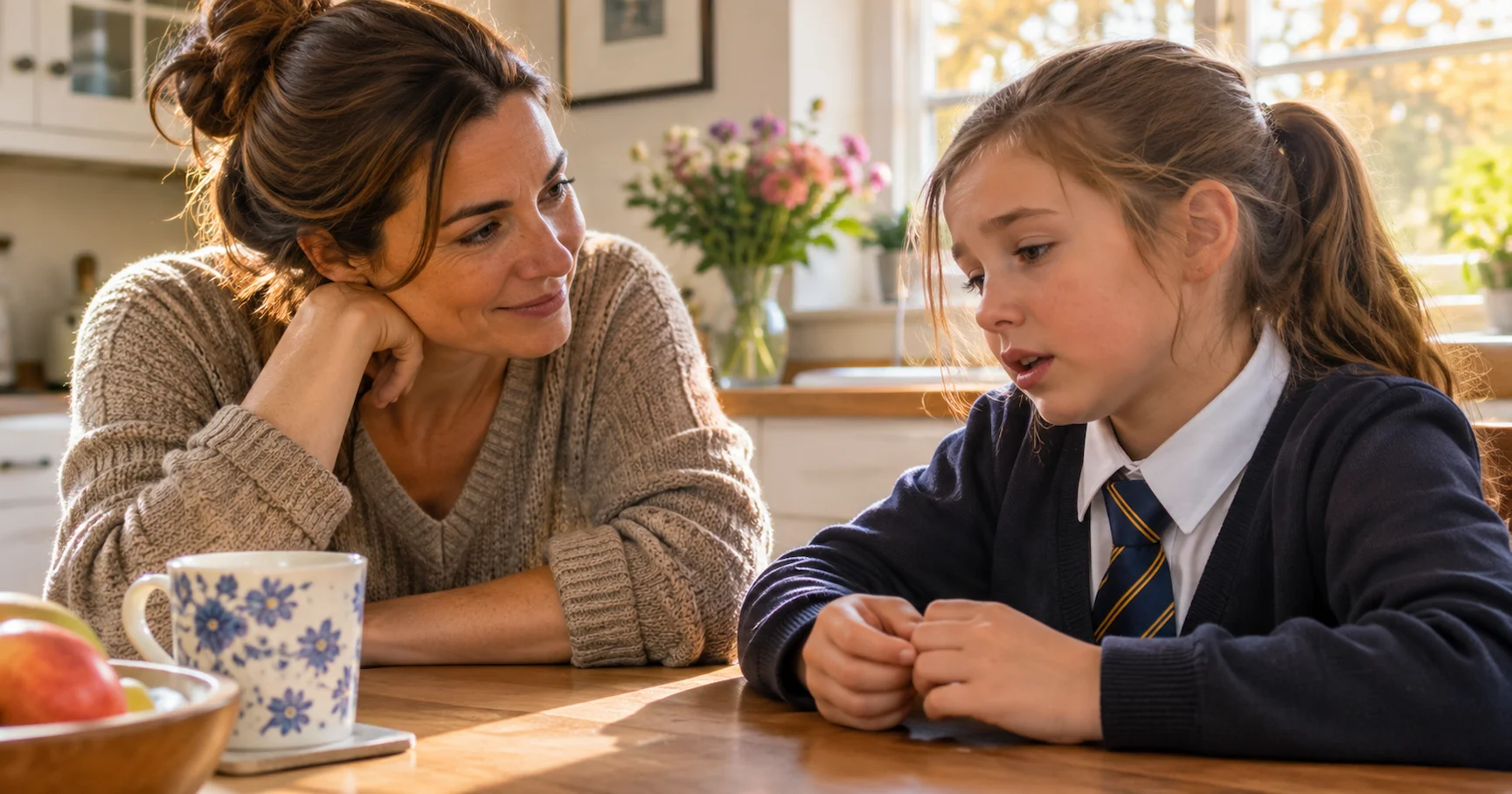
There are few things more unsettling for a parent than your child coming home in tears because of something that happened in the playground. The combination of your child's distress, the distance from the situation, and the intense instinct to protect can make even a routine primary school disagreement feel like a crisis requiring immediate intervention.
Most of the time, it is not. But occasionally it is, and the difference matters enormously — both for your child's wellbeing and for how effectively the situation is resolved. This guide explains how to tell the difference between a normal childhood falling out and something that requires adult intervention, the specific signs to watch for, and the right way to approach the school when action is needed.
- Shifting friendship groups, minor arguments and short-lived fallouts are a normal and expected part of primary school social development — children need to experience and navigate them to develop emotional resilience
- Bullying is defined by three criteria: it is intentional, it is repeated over time, and it involves an imbalance of power — a genuine falling out typically meets none of these
- Child development experts consistently recommend a "step-back, listen-first" approach for most friendship difficulties — coaching rather than rescuing
- When intervention is needed, the first contact should always be the class teacher, not the headteacher, not the other child's parent, and never via the WhatsApp class group
- All state schools in England are legally required to have a published Behaviour Policy and Anti-Bullying Policy — parents have the right to request these and to ask how the school intends to address the situation
- Cyberbullying via WhatsApp or online gaming — even when it happens outside of school hours — falls within schools' safeguarding responsibilities when it involves classmates and affects the school environment
The Difference Between a Falling Out and Bullying
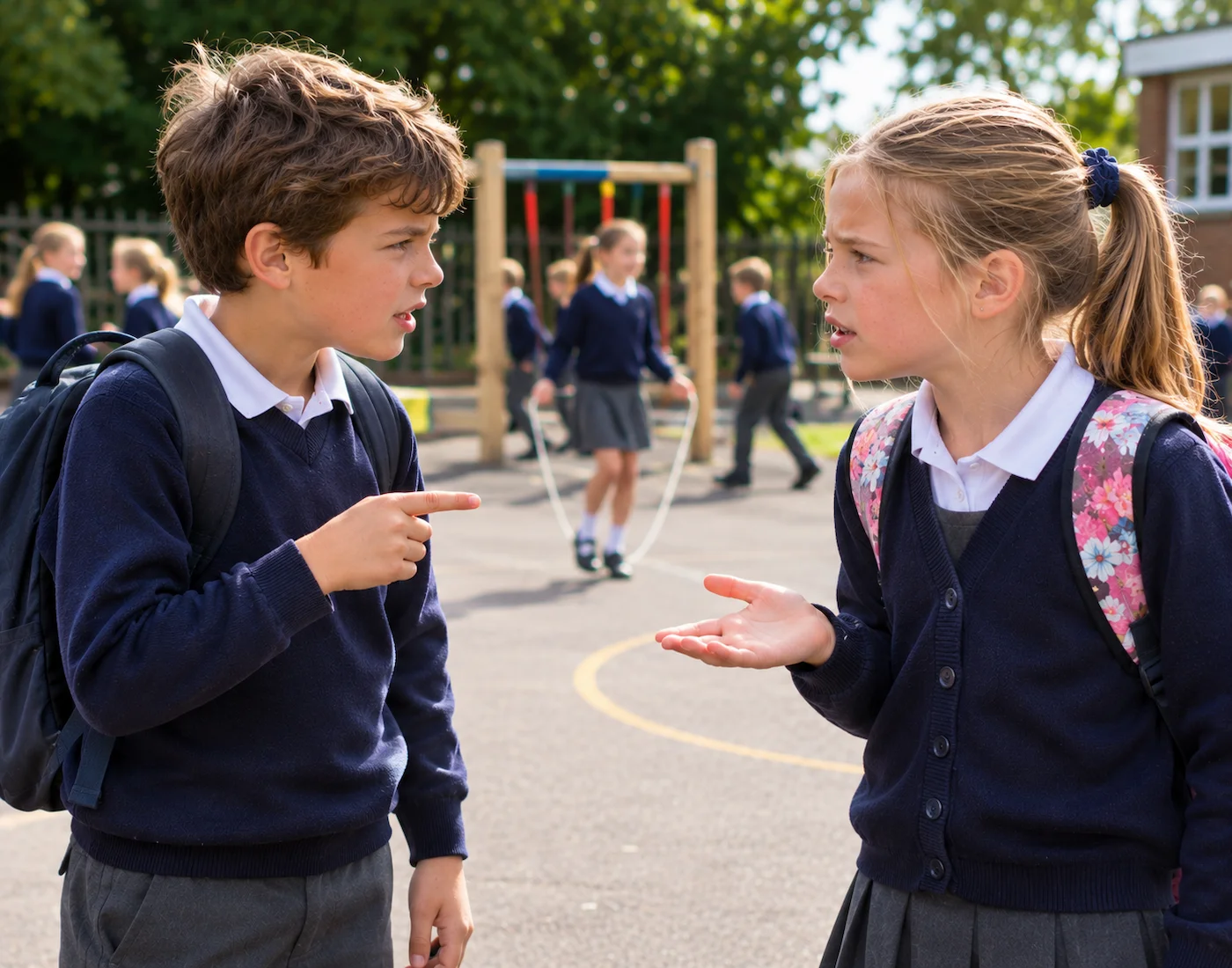
The single most useful framework for a parent navigating a school friendship difficulty is understanding the distinction between a falling out — which is part of normal childhood social development — and bullying, which requires adult intervention. The difference is not about how upset your child is in the moment. A routine disagreement can produce genuine distress, and the distinction is not always obvious from a tearful account delivered at the school gate.
The key is in three factors: intent, repetition, and power balance.
What a Falling Out Looks Like
A friendship falling out is typically:
- Mutual — both children have roughly equal power in the relationship and both have contributed in some way to the conflict. It is a two-way disagreement rather than one child being targeted by another
- Specific and situational — it has a clear trigger ("she wouldn't let me join her game," "he broke my model") rather than being a pattern of behaviour directed at your child without cause
- Short-lived — primary school children are often on the same terms again by lunchtime, or by the next day. A child who was inconsolable at 10 AM may arrive home excited about something that happened with the same friend at 3 PM
- Emotionally recoverable — your child remains generally willing and able to go to school, continues to engage with learning, and maintains other friendships and interests even while the falling out is active
Phrases like "you're not my best friend any more today" or "I'm not playing with you" are a normal part of primary school social vocabulary — upsetting to hear, but not indicators of anything requiring school involvement.
What Bullying Looks Like
Bullying is distinct from a falling out in three specific ways, as defined by the NSPCC and endorsed by the Department for Education's guidance to schools:
- Intentional: The behaviour is deliberate — it is designed to hurt, humiliate, exclude or intimidate. It is not a reactive comment made in the heat of a disagreement
- Repeated: The behaviour happens again and again, targeting the same child. It is a pattern rather than an incident
- Power imbalance: The child being targeted cannot easily defend themselves — because the other child has greater social standing in the peer group, because it is one child against a group, because of a physical difference, or because the targeted child's personality makes it difficult for them to respond confidently
When all three elements are present — deliberate intent, repetition, and power imbalance — the situation has moved beyond friendship difficulty and into the territory that schools have a formal responsibility to address.
 AI-generated image
Signs That Something More Serious Is Happening
Primary school children — particularly in KS1 and lower KS2 — often cannot articulate what is happening to them. They may not have the language for it, they may feel embarrassed, or they may fear that telling an adult will make things worse. Their distress frequently presents as behavioural or physical changes rather than direct reports of what is happening.
The following changes — particularly when several appear together, or when they persist over more than a week or two — are the signs that something beyond a routine falling out may be occurring.
Behavioural Signs
- Reluctance or refusal to go to school — particularly if your child was previously happy about going. This may present as invented physical symptoms (stomach aches, headaches, feeling sick) that consistently appear on school mornings and resolve during non-school hours
- Withdrawal and unusual quietness — a normally sociable or talkative child who becomes withdrawn, uncommunicative, or who goes straight to their room after school
- Increased anxiety or distress — disproportionate emotional reactions, tearfulness, or panic at the school gates that is new and persistent
- Increased aggression or irritability at home — children who are being bullied or excluded often displace their distress as aggression towards siblings or parents in the safe environment of home
- Sudden loss of interest in activities they previously loved — particularly clubs, sports or hobbies they shared with school friends
Physical and Material Signs
- Coming home with torn, damaged or dirty clothing without an explanation
- Unexplained bruises or marks — particularly in patterns that do not match a plausible accident
- Items going missing repeatedly — pencil cases, lunchboxes, clothing, books. "Lost" items that turn up damaged
- Missing lunch money or snacks that the child cannot account for
Academic and Social Signs
- A sudden unexplained drop in academic engagement — a child whose work standard or classroom participation falls noticeably
- No named friends when asked — if your child cannot name a single person they played with or sat with, consistently over several weeks
- Changes in sleep or appetite — nightmares, difficulty falling asleep, not eating lunch at school, or changes in eating patterns at home
When Not to Step In: The "Coach, Don't Rescue" Principle
For the majority of day-to-day friendship difficulties, child development experts recommend resisting the instinct to intervene directly and instead supporting your child to navigate the situation themselves. This approach — sometimes called "coaching rather than rescuing" — serves your child better in the long term, because the social skills developed through managing minor conflicts are genuinely important and not something you can acquire on their behalf.
What This Looks Like in Practice
- Listen without judgement. Let your child tell you what happened without interrupting, offering solutions, or bashing the other child. The goal is for your child to feel heard, not for you to solve it. "It sounds like that really hurt your feelings" is more useful than "That's awful, she sounds like a horrible child"
- Ask open questions that build perspective and problem-solving. "How do you think that made them feel?" or "What do you think you could do differently next time?" or "What would help you feel better?" These questions build empathy and agency
- Resist the urge to contact the other child's parent. This almost always escalates the situation rather than resolving it, puts children on the defensive, and can create a playground dynamic that makes things worse for your child. The exception is if you have a genuinely friendly relationship with that parent and are confident you can have a calm, non-accusatory conversation — which is much rarer than parents assume in the heat of the moment
- Broaden your child's social world. If your child relies heavily on one friendship group at school and that relationship is difficult, encouraging connections through clubs, activities, or playdates outside of school reduces the emotional intensity of the school friendship and gives your child confidence from other social connections
- Let it resolve. Many primary school friendship difficulties resolve themselves within a day or two without any adult intervention. If your child arrives home the next day reporting they played together fine, resist the impulse to re-open the previous day's drama
When and How to Contact the School
When to Act
Contact the school when one or more of the following is true:
- The behaviour between the same children has continued for more than one to two weeks without resolution, despite your child attempting to manage it
- There is a clear pattern of targeted behaviour — persistent name-calling, deliberate and repeated exclusion, or physical aggression directed at your child
- Your child's wellbeing or attendance is visibly affected — school refusal, significant anxiety, changes in personality, physical symptoms
- The behaviour involves physical harm or your child feels unsafe
- The behaviour has moved online — WhatsApp groups, gaming chats, or social platforms
How to Approach the School Effectively
The way you approach the school matters as much as the decision to contact them. The most effective approach:
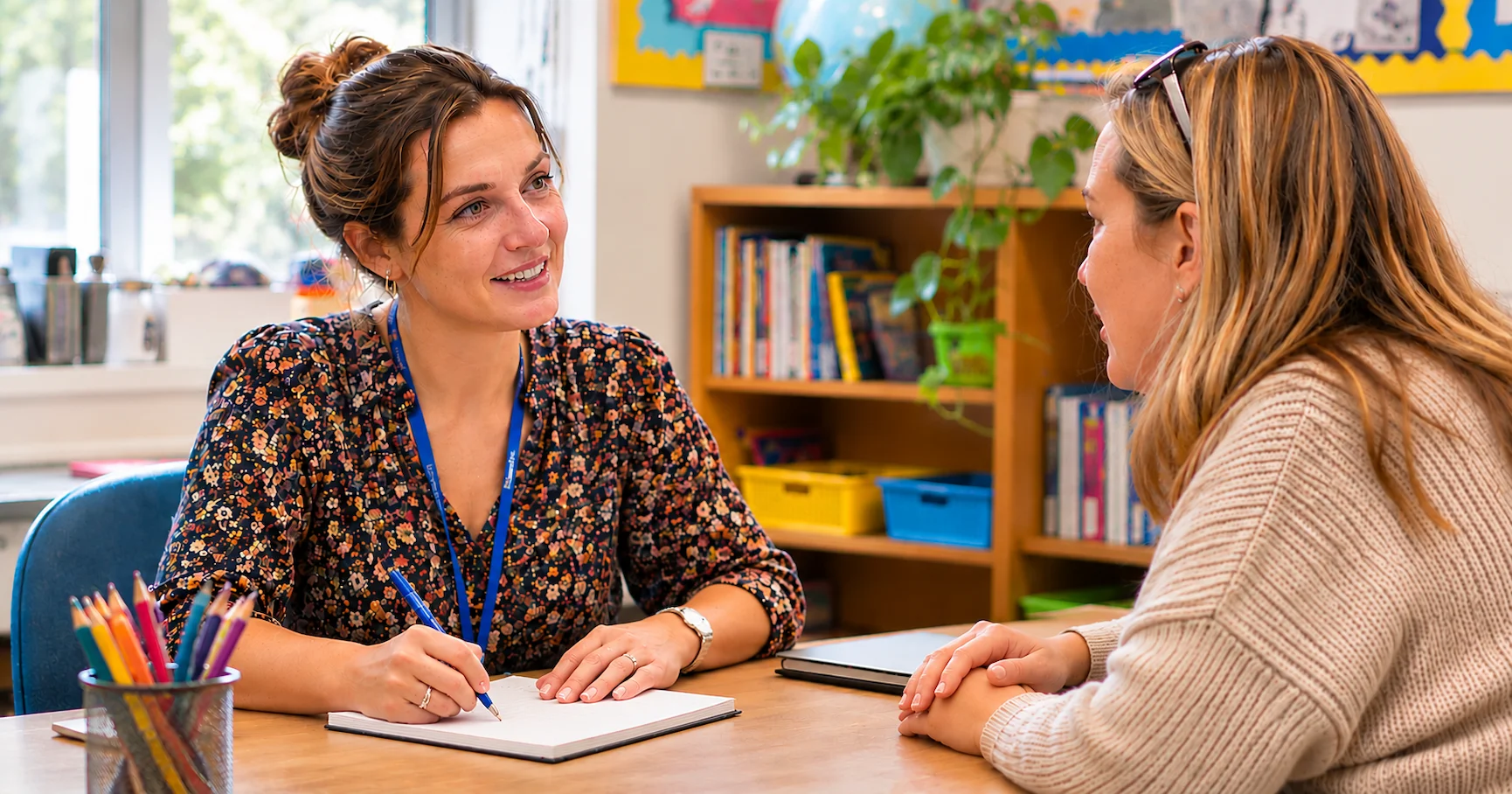
- Start with the class teacher. The class teacher is the first and correct point of contact — not the headteacher, not the school office, and not via the class WhatsApp group. The class teacher sees the playground and classroom dynamics firsthand, has the most detailed view of the situation, and has the most direct tools to address it
- Request a brief meeting or send a calm, factual email. Avoid trying to resolve the situation at the school gate in a two-minute conversation. An email or a scheduled meeting gives both you and the teacher adequate time and space
- Frame it collaboratively, not accusatorially. "I've noticed [child's name] has been quite anxious about school lately and has mentioned some difficulties at break times. I wanted to share this with you and understand how things look from your perspective" is more effective than "My child is being bullied and the school isn't doing anything about it" — even if both statements feel true. The first opens a conversation; the second puts the teacher on the defensive
- Keep notes. Write down dates, what your child reported, and any physical evidence. This record is useful if the situation continues and requires escalation
 AI-generated image
What Schools Can Do: Restorative Justice and Other Approaches
When a friendship difficulty is reported to a school, teachers have a range of practical tools available that parents often underestimate. These include:
- Restorative justice conversations — a guided, structured conversation where both children air their perspectives in a safe, supervised environment, with an adult facilitating. Research by Leeds Beckett University and others has shown these to be significantly more effective at producing lasting resolution than punitive responses alone
- Playground monitoring — teachers or lunchtime supervisors can be asked to observe specific children at break times without the children being aware
- Seating and grouping adjustments — separating children who are in conflict, or deliberately placing a socially isolated child alongside new classmates, can change the social dynamic significantly
- Circle time and PSHE sessions — whole-class activities about friendship, inclusion and respect that address the issue at a group level without singling out individuals
Your Legal Rights: Anti-Bullying and Behaviour Policies
All state schools in England are legally required by the Department for Education to have a published Behaviour Policy and a published Anti-Bullying Policy. Both documents must be available to parents — typically on the school's website. If you believe your child is being bullied, you have the right to:
- Request the school's Anti-Bullying Policy and ask how it applies to your child's situation
- Ask what specific steps the school will take to monitor and address the behaviour
- Follow up in writing after any meeting to confirm what was agreed
- Escalate to the headteacher if the class teacher's response is inadequate, and then to the governing body if the headteacher's response is inadequate
Cyberbullying: When It Moves Online
For children in Years 5 and 6 who have smartphones or access to group chats, friendship difficulties frequently migrate online — into WhatsApp groups, gaming platforms or social media. Exclusion from class group chats, mean messages, screenshots shared without permission, or ganging up on a child in an online gaming environment can all have the same harmful impact as in-person bullying, and can be significantly harder for a child to escape because the hostile environment follows them home.
If your child reports cyberbullying involving classmates:
- Take screenshots before anything is deleted. Screenshot every message, image or exchange that evidences the behaviour, including dates and times. This is your evidential record
- Do not delete anything from your child's device in the immediate term — the evidence may be needed
- Contact the school immediately. UK schools have a safeguarding responsibility to address online bullying that involves their pupils and affects the school environment — even when the behaviour happens outside school hours and off school premises. The school can investigate and take action
- Review device access temporarily — limiting the child's access to the platform where the bullying is happening reduces their ongoing exposure while the situation is being addressed
Frequently Asked Questions
My child says they have no friends at school. What should I do?
First, gather more information — children's reports of their social situation are genuine but can be compressed. "I have no friends" sometimes means "my best friend was away today" or "I argued with my usual group and sat alone at lunch." Ask specific questions: who did you sit next to at lunch? Who did you play with at break? If the pattern of genuine social isolation continues over several weeks — your child cannot consistently name anyone they played with or ate with — this warrants a calm conversation with the class teacher. Schools can monitor the playground, use circle time to address inclusion, and sometimes quietly pair a socially isolated child with a compatible classmate. Concurrently, widening your child's social world outside school through clubs or activities they enjoy reduces the weight carried by the school friendship situation.
Should I contact the other child's parents directly?
Generally no — and particularly not if you are upset, if the contact would be via WhatsApp, or if you do not have an existing friendly relationship with that parent. Direct parent-to-parent contact about a friendship difficulty almost always escalates the situation rather than resolving it. Parents are naturally protective of their children, and an approach that feels accusatory — even when you do not intend it that way — will produce a defensive response rather than cooperation. The school is the correct intermediary: teachers have neutral authority and practical tools that individual parents do not. If the other parent reaches out to you, be calm and factual rather than emotional, and suggest the school handles it.
What is the difference between bullying and a falling out?
The NSPCC and Department for Education guidance identifies three criteria that distinguish bullying from a friendship falling out: (1) the behaviour is intentional — it is meant to hurt, humiliate or exclude; (2) it is repeated — it happens again and again, targeting the same child, not as a one-off incident; and (3) there is a power imbalance — the targeted child cannot easily defend themselves or resolve the situation because the other child or group has greater social power. A falling out is typically mutual, specific to a situation, short-lived, and involves children who are otherwise on roughly equal terms. A falling out can be very upsetting in the moment, but it does not meet the definition of bullying.
My child's school is not taking the bullying seriously. What can I do?
Start by confirming you have followed the correct escalation route: class teacher first, then headteacher, then the school's governing body. Put everything in writing — emails rather than phone calls — so there is a record of what you reported and what response you received. Request the school's Anti-Bullying Policy (they are legally required to have one and to share it with parents) and ask specifically how it applies to your child's situation and what steps will be taken. If the school's response remains inadequate after escalation to the headteacher, contact the school's governing body. As a last resort, contact the local authority's school improvement team or the Regional Schools Commissioner's office.
How do I talk to my child about bullying without making them more anxious?
Focus on the conversation being a safe space rather than an investigation. Use open, non-leading questions: "How are things going with [friend's name]?" rather than "Is [friend's name] being mean to you?" Listen more than you respond, and validate feelings without amplifying them: "That sounds really hard" is more useful than "That's absolutely terrible, how awful." Avoid inadvertently communicating your own anxiety — children are perceptive, and a parent who appears very worried will sometimes protect you by minimising what they tell you. Emphasise that talking to you is safe and that nothing they tell you will make things worse.
Can schools address bullying that happens online and outside school hours?
Yes — UK schools have a safeguarding and behaviour policy responsibility to address cyberbullying involving their pupils when the behaviour affects the school environment, even if it occurs outside school hours and off school premises. This is established in Department for Education guidance on behaviour and bullying. If your child is being bullied online by classmates, report it to the class teacher with screenshots as evidence. The school can investigate, address the behaviour through their disciplinary procedures, and take steps to improve the school environment. Simultaneously, contact the platform's reporting tools and review your child's access to the platform while the situation is addressed.


