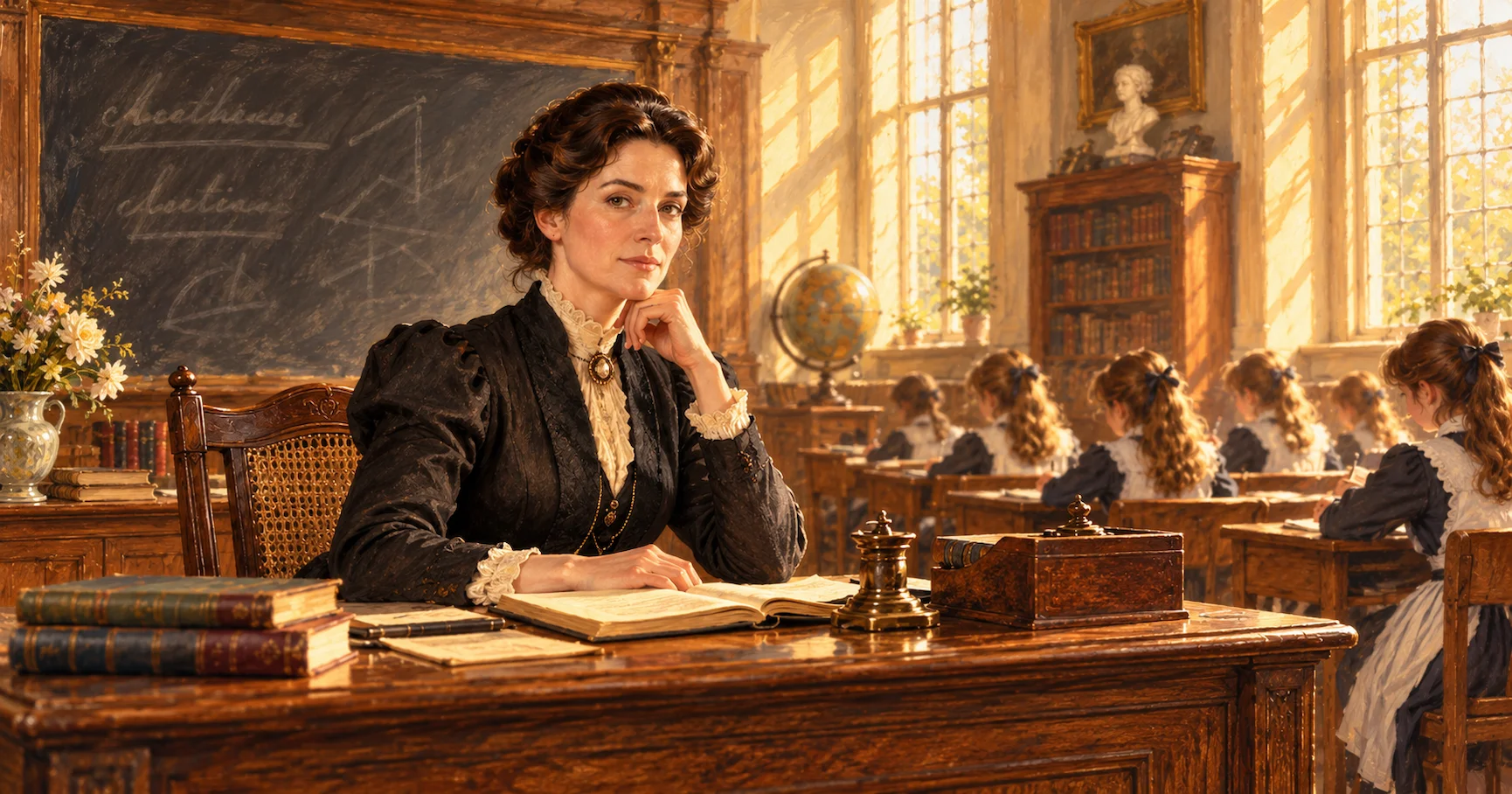
Few figures in English educational history have left a mark as enduring as Frances Mary Buss (1827–1894). At a time when middle-class girls were expected to spend their schooling learning embroidery and polite conversation rather than mathematics and Latin, Buss built a school on the radical conviction that girls deserved exactly the same intellectual rigour as boys. The institutions she created and the campaigns she led permanently altered the landscape of secondary education in England — for girls and, in time, for everyone.
Frances Mary Buss (1827–1894) was an English educator and reformer who founded the North London Collegiate School in 1850 and the Camden School for Girls in 1871. She gave influential testimony to the Taunton Commission in 1865, helped professionalise teaching through the Association of Head Mistresses (founded 1874), and campaigned successfully for girls to sit public examinations at Cambridge and Oxford. She is widely regarded as one of the most important figures in the history of girls' secondary education in England.
Early Life and Education
Frances Mary Buss was born on 16 August 1827 in London, the eldest child of Robert William Buss (an artist and etcher) and Frances Fleetwood. The family was intellectually lively but financially unstable — a combination that gave Buss both ambition and a keen awareness of the limitations placed on women without independent means.
She began teaching at the age of 14, assisting in the small school her mother ran from their home. By the time she was 18, she and her mother had opened their own private school in Kentish Town. Despite the demands of running a school, Buss pursued her own education in parallel, attending evening classes at Queen's College, Harley Street — the first institution in England to award academic certificates to women, founded in 1848. The experience transformed her understanding of what rigorous female education could look like, and gave her both the intellectual tools and the reforming confidence to pursue it.
Founding the North London Collegiate School (1850)
On 4 April 1850, aged just 23, Frances Mary Buss opened the North London Collegiate School for Ladies at 46 Camden Street in Camden Town, London. It was a deliberate act of educational innovation, designed to serve a specific and underserved group: the daughters of middle-class families who could not afford private governesses but who were too genteel (in the social conventions of the time) to attend charity schools.
From the outset, Buss insisted on a curriculum that broke sharply with Victorian convention. Girls at the North London Collegiate School studied mathematics, science, Latin and modern languages — subjects that were almost exclusively the preserve of boys' schools. Conservative parents withdrew their daughters in alarm. Others were drawn by the school's rapidly growing reputation for academic achievement.
Frances Mary Buss is widely credited with coining and popularising the term "headmistress" to describe her own leadership role at the North London Collegiate School. Before her, female principals were variously styled as "proprietresses", "mistresses-in-charge" or simply "mistresses". The term she introduced remains universal in British schools today.
In 1870, Buss took the significant step of transferring the school from her personal ownership to a board of trustees, effectively converting it into an endowed public institution with long-term financial security. Funding came from City of London livery companies — including the Brewers' Company and the Clothworkers' Company — giving the school the stability she had worked for throughout its first two decades.
 AI-generated image
Testimony to the Taunton Commission (1865)
The Schools Inquiry Commission — commonly known as the Taunton Commission after its chairman, Lord Taunton — was established in December 1864 to investigate the state of secondary education in England and Wales. For the first time, its brief explicitly included an examination of girls' schools.
Frances Mary Buss was called to give evidence in 1865. Drawing on fifteen years of experience running the North London Collegiate School, she testified with precision and conviction on several fronts:
- The inadequacy of existing secondary provision for girls, which she described as scattered, underfunded, and academically shallow
- The intellectual capacity of girls to master the same curriculum as boys — demonstrated by the results of her own pupils
- The urgent need for public examinations open to girls, to create a standard against which schools and pupils could be assessed
- The case for publicly endowed secondary schools for girls, rather than leaving provision entirely to private enterprise
The Commission's report, published in 1868, validated the reformers' arguments and opened the door to the Endowed Schools Act of 1869 — legislation that, for the first time, allowed educational endowments to be redirected towards girls' schools. The report also helped create the conditions in which Cambridge and Oxford agreed to open their local examinations to female candidates from the 1860s onwards.
| Year | Milestone |
|---|---|
| 1827 | Born in London |
| 1841 | Begins teaching at age 14 in her mother's school |
| 1848 | Attends Queen's College, Harley Street |
| 1850 | Founds the North London Collegiate School for Ladies |
| 1865 | Testifies before the Taunton Commission |
| 1870 | Transfers NLCS to a board of trustees; school becomes an endowed public institution |
| 1871 | Founds the Camden School for Girls |
| 1874 | Founds the Association of Head Mistresses (serves as first president) |
| 1885 | Helps establish the Cambridge Training College (later Hughes Hall) for teacher training |
| 1894 | Dies in London, aged 66 |
Founding the Camden School for Girls (1871)
Having secured NLCS as an endowed institution, Buss turned her attention to extending high-quality secondary education even further down the social ladder. In January 1871, she opened the Camden Lower School — later renamed the Camden School for Girls — to serve the daughters of tradesmen, clerks, civil servants, and small business owners: families for whom even the fees of NLCS were a strain.
The school started with approximately 40 pupils and expanded rapidly. In its early years it faced financial hardship and social scepticism, but the patronage of Princess Alexandra (later Queen Alexandra) helped legitimise the school and secure its survival. Camden School for Girls continues to operate today as a state-funded comprehensive secondary school and sixth form in the London Borough of Camden, maintaining a strong commitment to the inclusive and academically ambitious ethos its founder instilled.
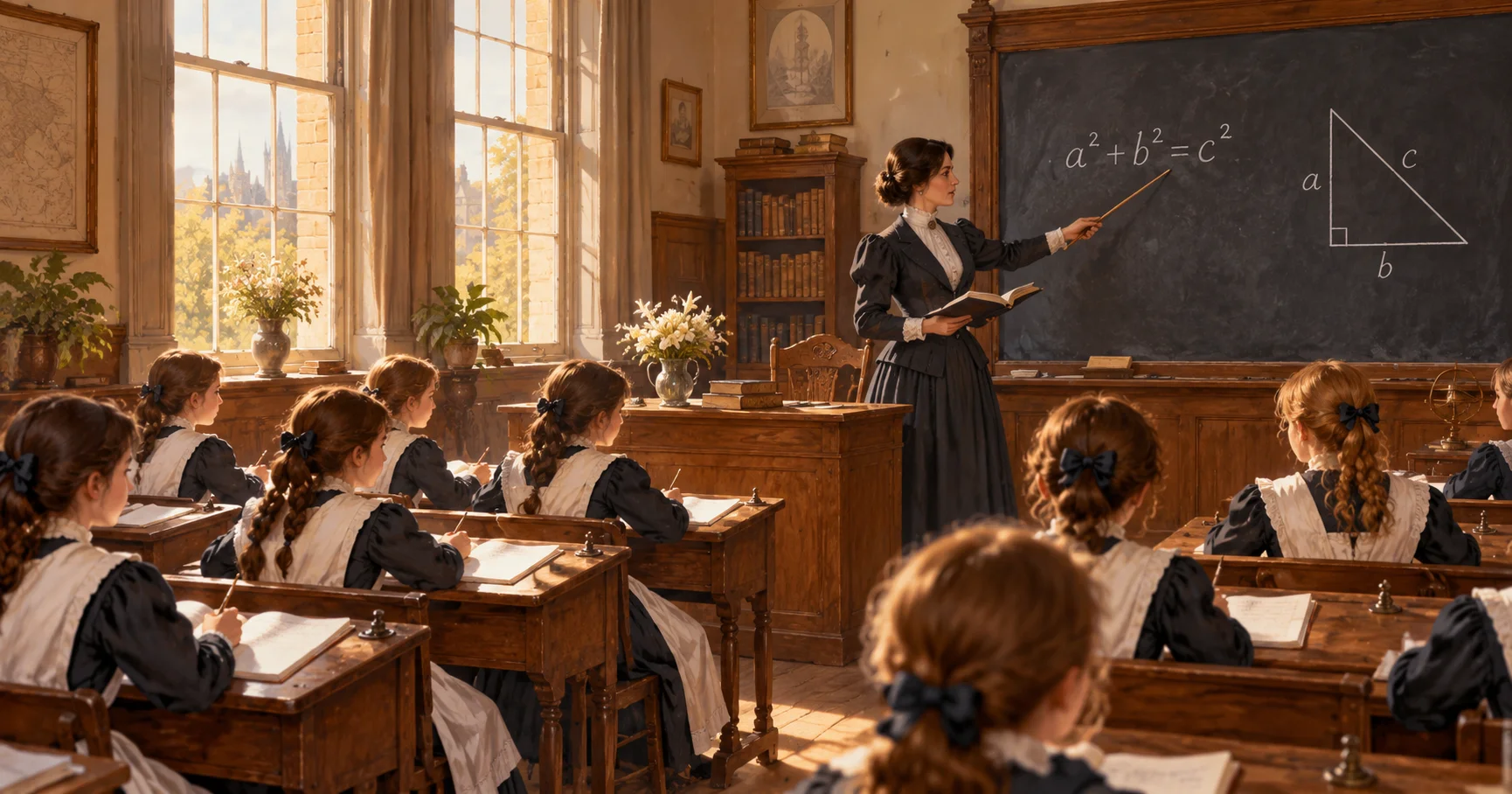 AI-generated image
Professionalising Teaching: The Association of Head Mistresses
Buss understood that creating good schools was not enough if female teachers and headmistresses lacked the professional infrastructure to sustain them. In 1874, she founded the Association of Head Mistresses of Endowed and Proprietary Schools (later the Association of Head Mistresses, or AHM), holding its first meeting at her own home with approximately thirteen founding members.
The AHM served several vital functions:
- Providing a collective professional voice for female headmistresses to influence education policy
- Setting and maintaining academic standards across girls' schools
- Advocating for women's continued control of girls' schools at a time when male governors often sought to override headmistresses on curriculum matters
- Supporting the professional training of female teachers
Buss served as the AHM's president from its founding in 1874 until her death in 1894 — twenty years of unbroken leadership. In 1885, she also played a central role in establishing the Cambridge Training College (later Hughes Hall, now a college of the University of Cambridge) — one of the first institutions in England dedicated to the professional training of secondary school teachers.
Buss, Beale, and the Reform Movement
Frances Mary Buss is rarely discussed without her contemporary and fellow reformer Dorothea Beale (1831–1906), principal of the Cheltenham Ladies' College from 1858. The two women knew each other and shared the commitment to rigorous academic education for girls, though they approached it differently: Buss's schools were day schools serving London's middle classes, while Beale's Cheltenham Ladies' College was a boarding school for the daughters of the professional gentry.
Their association gave rise to one of Victorian England's best-known satirical rhymes, composed by an anonymous wit at a student debate:
"Miss Buss and Miss Beale
Cupid's darts do not feel.
How unlike us,
Miss Beale and Miss Buss."
The verse mocked the two women's supposed indifference to romance — and was widely repeated precisely because it captured the discomfort their professional confidence and ambition produced in some quarters of Victorian society. Both women were aware of it and treated it with equanimity. They had larger things to attend to. You can read more about Beale's parallel work in the companion article on Dorothea Beale and the transformation of girls' schooling.
Working alongside figures such as Emily Davies — who founded Girton College, Cambridge, and campaigned for women's access to university degrees — Buss was part of a broader network of Victorian women reformers who collectively dismantled the assumption that intellectual life was an exclusively male domain. Emily Davies' work is explored in the companion article on Emily Davies and women's access to university education.
Legacy: What Frances Mary Buss Changed
Frances Mary Buss died on 24 December 1894, aged 66. By then, the transformation she had helped bring about was already visible across England. Within a generation of her testimony to the Taunton Commission, most major towns in England had established girls' secondary schools modelled — directly or indirectly — on the blueprint she had proven at the North London Collegiate School.
Her specific contributions to English education include:
- Proof of concept: NLCS demonstrated, over four decades, that girls from ordinary middle-class families could achieve as much academically as their brothers — and that there was a substantial market for serious girls' education
- Public examinations: Her advocacy was central to the opening of Cambridge and Oxford local examinations to female candidates, creating the external validation that girls' schools needed to be taken seriously
- Endowed schools: Her testimony contributed to the legal framework that allowed educational endowments to be redirected to girls' schools for the first time
- The headmistress as a professional: Through the AHM and her own example, she established the role of headmistress as a position of intellectual authority, not merely administrative convenience
- Teacher training: Her work to establish the Cambridge Training College helped create the infrastructure for a professionally trained female teaching workforce
The North London Collegiate School continues today as one of the most academically distinguished independent schools in the world, regularly placing among the highest in national league tables and awarding a significant proportion of its International Baccalaureate students the top grade. Its founding philosophy — that girls should be educated to think independently and aim as high as they are capable — remains unchanged from the conviction Frances Mary Buss brought to her desk in Camden Street on 4 April 1850.
For a broader view of how women reshaped secondary education in this period, see the overview of women pioneers in English schooling.
Frequently Asked Questions
What did Frances Mary Buss do for girls' education?
Frances Mary Buss founded the North London Collegiate School for Ladies in 1850 and the Camden School for Girls in 1871, providing serious academic education — including mathematics, science and Latin — to girls at a time when female schooling focused almost exclusively on social accomplishments. She also gave influential testimony to the Taunton Commission (1865), helped open public examinations to female candidates, and founded the Association of Head Mistresses in 1874. Her work helped establish a national model for girls' secondary education that spread across England by the early 20th century.
When was the North London Collegiate School founded, and does it still exist?
The North London Collegiate School was founded on 4 April 1850 by Frances Mary Buss, initially operating from her family home at 46 Camden Street in Camden Town. It does still exist: having moved from its original site, NLCS is now located in Canons Park, Edgware, and operates as one of the leading independent academic day schools in the UK. It consistently achieves among the highest results nationally and has expanded internationally with schools in South Korea, Singapore and Dubai.
What was the Taunton Commission and why was it significant for girls' education?
The Schools Inquiry Commission (Taunton Commission) was established in December 1864 to investigate secondary education in England and Wales. It was the first official inquiry to examine girls' schools in detail. Frances Mary Buss gave evidence in 1865, arguing powerfully for the reform of girls' secondary education and for girls' access to public examinations. The Commission's 1868 report validated these arguments and contributed to the Endowed Schools Act of 1869, which allowed charitable educational endowments to be redirected to girls' schools for the first time.
Who was Dorothea Beale, and how was she connected to Frances Mary Buss?
Dorothea Beale (1831–1906) was the principal of the Cheltenham Ladies' College from 1858 and one of the most prominent reformers of girls' education in Victorian England. She and Buss were contemporaries who shared a commitment to academic rigour for girls, though they worked in different contexts — Buss's schools were London day schools, Beale's was a boarding school for the professional classes. Both women's names were immortalised in a Victorian satirical rhyme about their supposed indifference to romance. Together they are regarded as the two most influential figures in the transformation of girls' secondary schooling in 19th-century England.
What was the Association of Head Mistresses and why did Buss found it?
The Association of Head Mistresses of Endowed and Proprietary Schools was founded by Frances Mary Buss in 1874 to give female headmistresses a collective professional platform. It advocated for standards in girls' schools, lobbied for education policy reform, and worked to ensure that women retained genuine authority over the institutions they led. Buss served as its president from 1874 until her death in 1894. The organisation helped professionalise secondary school leadership for women at a time when female authority in educational institutions was frequently contested.
Is Camden School for Girls still linked to the North London Collegiate School?
Both schools were founded by Frances Mary Buss, but they have operated independently for many decades. The North London Collegiate School is now an independent day school based in Edgware. Camden School for Girls is a state-funded comprehensive secondary school and sixth form in Camden, London. They share a common founding history and ethos, but are separate institutions with distinct governance, funding and admissions arrangements.