
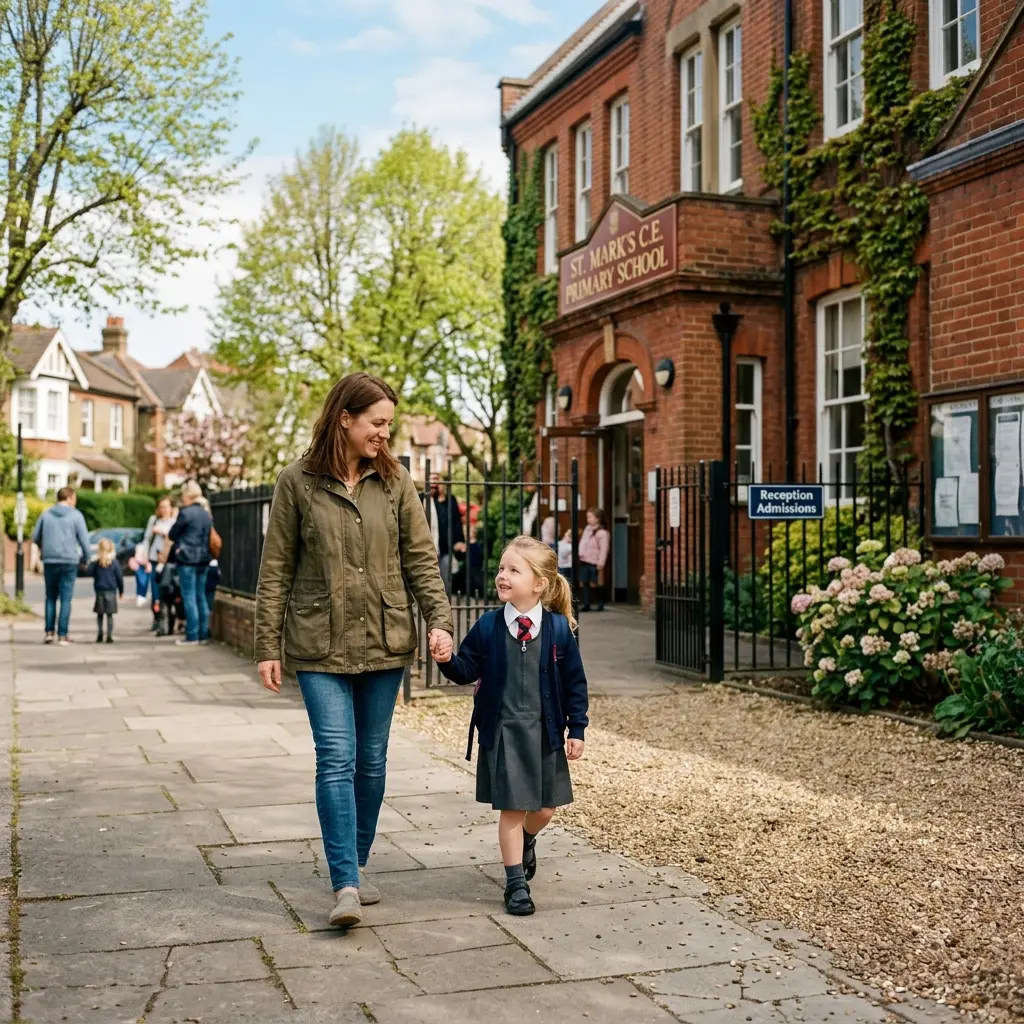
Securing a place at a good primary school is one of the most important — and often most stressful — decisions a family makes in England. The system can seem opaque: deadlines appear suddenly, admissions criteria read like legal documents, and the fear of missing out on a preferred school is very real. This guide demystifies the entire process, from registering your interest to understanding what happens if your first-choice school says no.
In England, you do not apply directly to a school — you apply to your local authority (council), which then coordinates all applications and allocates places according to each school's oversubscription criteria.
When Does Primary School Start?
In England, children must be in full-time education by the term after their fifth birthday — known as compulsory school age. However, most primary schools offer places from Reception year, which is the year a child turns five. The vast majority of families apply for a Reception place before the child turns four.
Children can also start school in Nursery (for children aged 3–4), but nursery places are separate from the Reception admissions process and are not guaranteed even at the same school.
You can also request to defer your child's start until they reach compulsory school age (the term after their fifth birthday), or ask for them to start part-time initially. This does not affect their allocated school place.
Key Dates in the Admissions Timeline
The admissions timetable is set nationally and is broadly the same in every local authority across England. Missing these dates is one of the most common mistakes parents make:
| Date / Period | What Happens |
|---|---|
| September | Local authorities publish their Coordinated Admissions Scheme for the following September intake |
| November – January | Application window opens. Most councils now use an online portal. You list up to 3 (sometimes 6) preferred schools |
| 15 January | ⚠️ National closing date for Reception applications. This is a hard deadline — late applications are processed after on-time ones |
| 16 April | 🎉 National Offer Day. Families receive their offer by email or online portal (and by post the following day) |
| By 30 April | Parents must accept or decline the offered place. Missing this date can result in losing the offer |
| May onwards | Waiting list movement begins. Appeals can be submitted. Families who were not offered their first choice begin the appeals process |
How to Apply: Step by Step
Step 1 — Research Your Options
Before applying, visit schools in person whenever possible. Open days typically run from October to December. Consider:
- Proximity to your home address (critical for most oversubscription criteria)
- The school's Ofsted rating and most recent inspection report
- Whether the school is a community, academy, faith, or free school — different types may use different criteria
- The school's admissions policy (available on its website and the local authority's website)
- Data on how close the furthest-distance child was admitted in previous years — your local authority publishes this
Step 2 — Complete the Application
Apply through your home local authority's online portal, even if some of your preferred schools are in another local authority. You will rank your preferences — most councils allow between 3 and 6 choices. The ranking tells the council your order of preference; it does not affect whether schools consider your application. List your genuine first choice first, then add backup schools in realistic order.
Listing a school does not hurt your chances at another school. Schools cannot see how you've ranked them. Always include at least one school where you are very likely to be offered a place (e.g. your nearest community school).
Step 3 — Gather Supporting Documents
For certain schools or criteria, you may need to submit additional documents:
- Faith schools — Baptism certificates, letters from priests, supplementary information forms
- EHCP (Education, Health and Care Plan) — Children with an EHCP have a separate naming process; the local authority must name an appropriate school
- Looked-after children — Documentation from the placing authority may be required
- Medical or social needs — Written evidence from a professional (e.g. GP, consultant) supporting the claim
Step 4 — Submit By the Deadline
The national deadline is 15 January. Late applications are valid but are processed after all on-time applications — meaning you are at a significant disadvantage even if you applied just one day late.
How Schools Decide Who Gets a Place
When a school is oversubscribed (more applications than places), it uses its published oversubscription criteria to rank applicants. The order in which criteria are applied is strictly defined. By law, the first two places in priority must always be:
- Children in care or previously in care (looked-after children)
- Children with an EHCP that names the school
After that, criteria vary by school type but typically include (in order of priority):
- Siblings already at the school
- Children of staff (in some schools)
- Faith criteria (for faith schools)
- Distance from home to school (usually straight line, sometimes walking route)
In some highly oversubscribed urban schools, only siblings and looked-after children receive places. The geographical catchment can be as small as 0.3 miles. Always check the previous year's supplementary data published by your local authority before applying.
What Happens If You Don't Get Your First Choice?
Not receiving your preferred school in the first round is more common than many parents expect, particularly in cities and densely populated areas. If this happens, you have three main options:
Option 1 — Accept the Offered Place
Accept the place you were offered to ensure your child has a guaranteed school. Accepting a place does not prevent you from appealing or joining waiting lists — these run concurrently. Refusing an offer without an alternative secured risks your child having no place at all.
Option 2 — Join Waiting Lists
Ask your local authority to place your child on the waiting list for any school you prefer to your offered place. Waiting lists are maintained in oversubscription-criteria order (not in first-come, first-served order). As families decline offers or move away, places become available. Some schools see significant movement between April and September.
Option 3 — Appeal
You have a statutory right to appeal to an independent appeal panel. Appeals are heard from May onwards and must be submitted within the deadline set by the local authority (usually 20 school days from the date of the refusal letter).
There are two grounds for a successful appeal:
- Procedural error — The school or local authority made a mistake in applying the admissions criteria. If proven, your child must be admitted.
- Balancing exercise (infant class size appeals) — For Reception, Year 1, and Year 2, class sizes are legally capped at 30. Appeals on these grounds are very hard to win unless there was a clear error.
Before appealing, request a copy of your child's application assessment from the local authority. Check whether you were correctly ranked against the oversubscription criteria. Errors in distance calculations or sibling status assessment do occur and can be grounds for a successful appeal.
Applying In-Year (Outside the Normal Round)
If you need a school place outside the normal September intake — for example, because you have moved to a new area — you can apply for an in-year place. You apply either directly to the school or through the local authority, depending on the school's type. The same oversubscription criteria apply. If no vacancy exists, your child should be added to the waiting list.
Local authorities are required to help families who cannot find a school place through in-year applications. If no school can accommodate your child, the authority must provide a suitable place.
Useful Tools on Schools in England
Before submitting your application, use our free tools to help narrow down your choices:
- 🔍 Search Schools — browse all primary schools in England by location, type, or Ofsted rating
- 📍 Catchment Area Checker — see which schools are nearest to your postcode and check admissions data
- 🧙 School Finder Wizard — answer a few questions and get a personalised shortlist
Frequently Asked Questions
Can I apply to a school in a different local authority?
Yes. You must still use your home local authority's application portal, but you can list schools in other council areas as preferences. Those schools will apply their admissions criteria equally to all applicants regardless of which authority they are in.
Does my child have to take a test to get into primary school?
No — primary admissions in England are not based on academic tests. Selection by ability at primary level is not permitted under the School Admissions Code. Grammar schools (which do select by ability) only operate at secondary level.
What if my child has special educational needs?
If your child has an EHCP, the local authority must name a school in the plan that can meet their needs. This is a separate process from the general admissions round. If your child has SEN but no EHCP, they go through the standard admissions process, but schools have a duty to make reasonable adjustments.
Can I defer my child's start at primary school?
Yes. Children do not legally have to be in full-time education until the term after their fifth birthday. You can request to defer your child's start until later in Reception year (up to compulsory school age), or ask for part-time attendance initially. You cannot defer to the following September — you would need to reapply for Year 1.
How likely is it that I will get my first-choice school?
Nationally, around 75–80% of families receive their first-choice primary school each year. In rural areas the figure is higher; in popular urban schools it can be well below 50%. Checking historical admissions data (distance offered, number of siblings, etc.) is the most reliable guide to your realistic chances.


