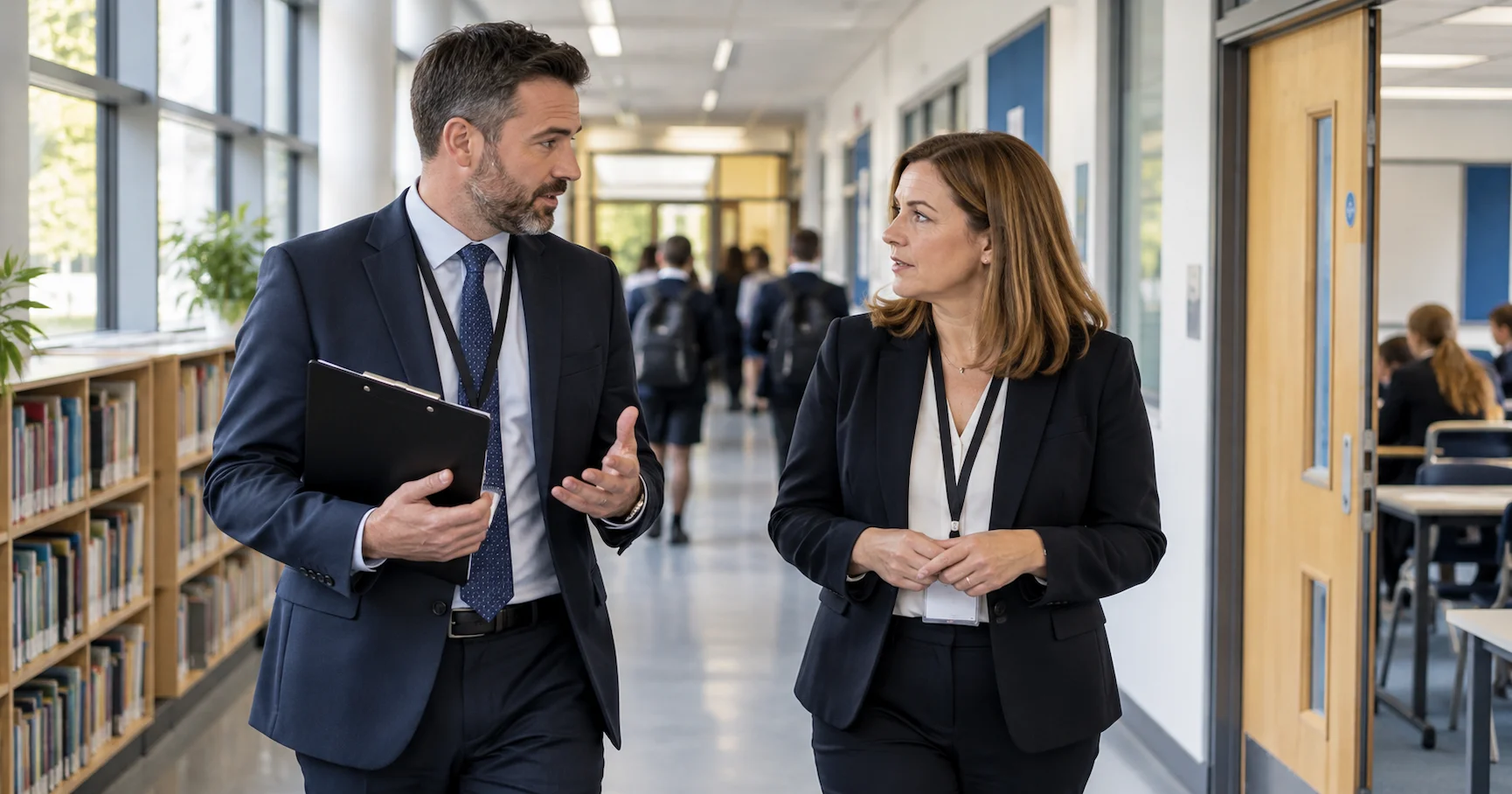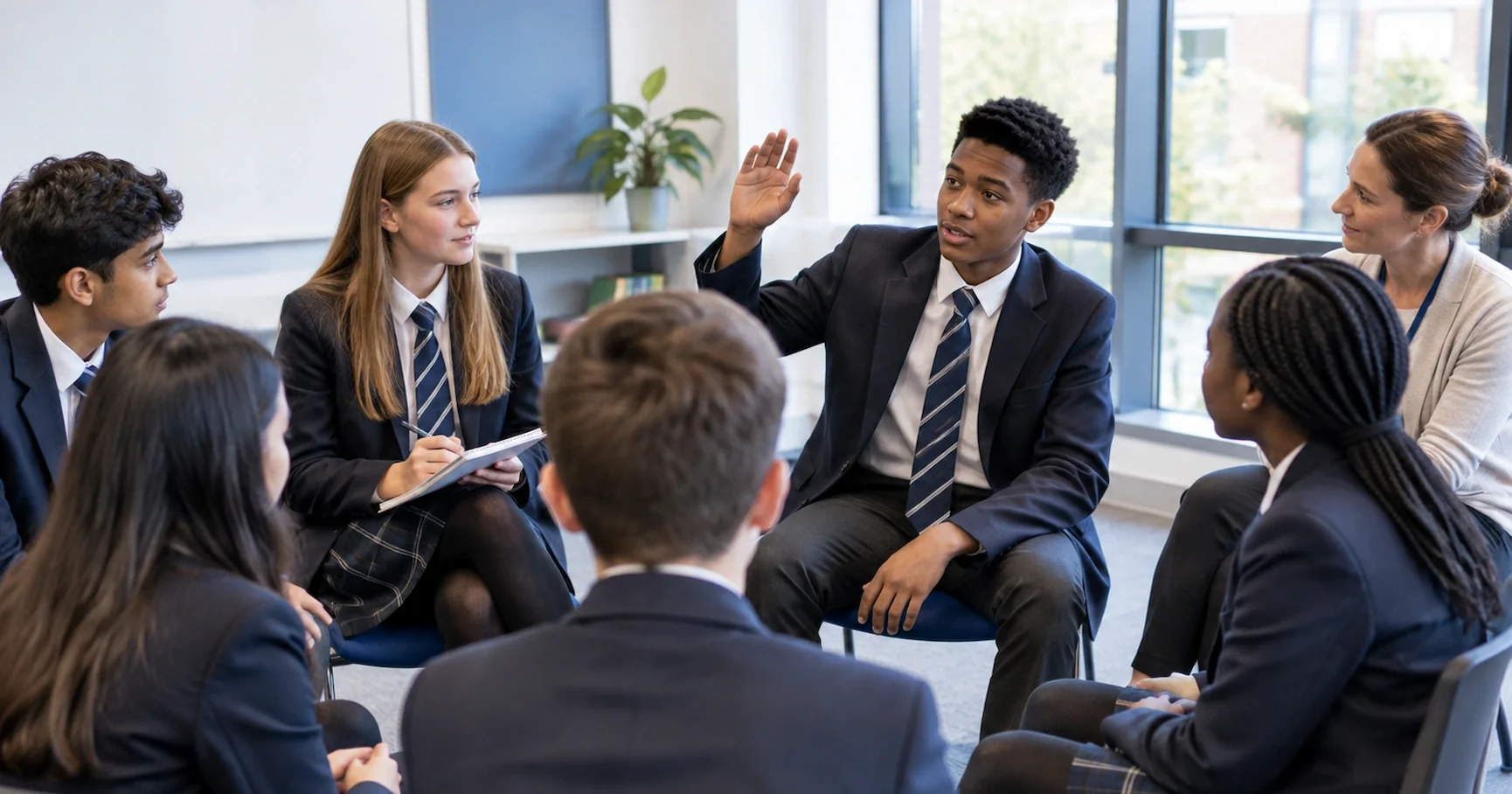
Most secondary schools in England — and many primary schools — have a student council or some form of formal pupil voice structure. Yet many parents and pupils are unsure what these bodies actually do, how much influence they genuinely have, and how a pupil can get involved.
This guide explains how student councils work in practice, what "pupil voice" means in the context of Ofsted inspections and school governance, and what you can realistically expect from these structures.
Ofsted inspectors actively seek evidence of pupil voice during school inspections. Under the new Ofsted Report Card framework (introduced from November 2025), the quality of pupils' personal development — including whether they are given meaningful opportunities to contribute to school life — is assessed as a distinct area.
What Is Pupil Voice?
Pupil voice is the broad term for all the ways in which a school actively seeks, listens to, and responds to the views, opinions, and experiences of its pupils. It goes beyond the student council to include:
- Structured surveys and questionnaires completed by all pupils
- Focus groups convened by senior leaders or governors
- Informal feedback gathered by form tutors or pastoral staff
- Pupil representatives on governor committees
- Annual pupil wellbeing reviews
The underlying principle is that pupils are not simply recipients of an education — they are active participants in the school community whose perspectives should shape decisions about teaching, environment, and policy.
Why Do Schools Prioritise Pupil Voice?
Schools in England are expected to demonstrate pupil voice as part of their broader commitment to personal development and school improvement. Ofsted's inspection framework — both the old four-grade system and the new Report Card — evaluates whether schools create meaningful opportunities for pupils to develop as responsible, respectful citizens. Pupil voice sits at the heart of this expectation.
Beyond inspection, research consistently shows that pupils who feel their opinions matter are more engaged with learning, more likely to report concerns, and more invested in their school community.
What Is a Student Council?
A student council (sometimes called a school council or pupil parliament) is a group of elected pupil representatives who meet regularly to discuss school issues, put forward ideas, and act as a formal channel between the pupil body and school leadership.
How Is a Student Council Structured?
The structure varies between schools, but a typical secondary school student council will include:
- Form or tutor group representatives — usually one or two pupils elected per class who attend regular council meetings and report back to their group
- Year group representatives — senior pupils who coordinate the voice of an entire year group
- Executive officers — roles such as Chair, Vice-Chair, Secretary and Treasurer, elected by the full council
- A staff liaison — a teacher or member of pastoral staff who facilitates meetings and communicates decisions to senior leadership
In primary schools, councils are typically simpler — often one elected representative per class — but the principles are the same.
 AI-generated image
How Are Student Council Members Elected?
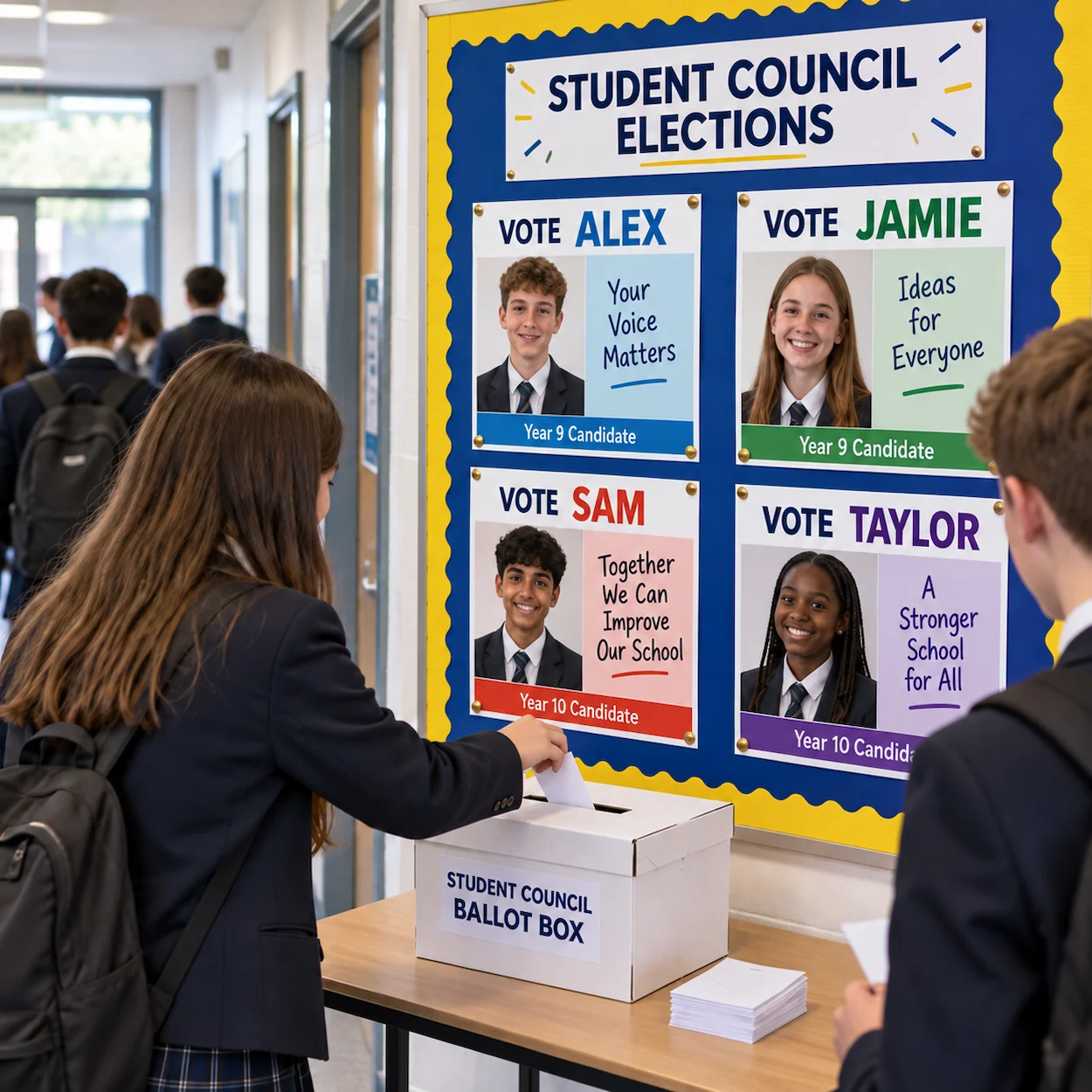
Elections vary in formality. In many schools, the process is deliberately designed to mirror democratic elections:
- Pupils put themselves forward as candidates, often submitting a short personal statement
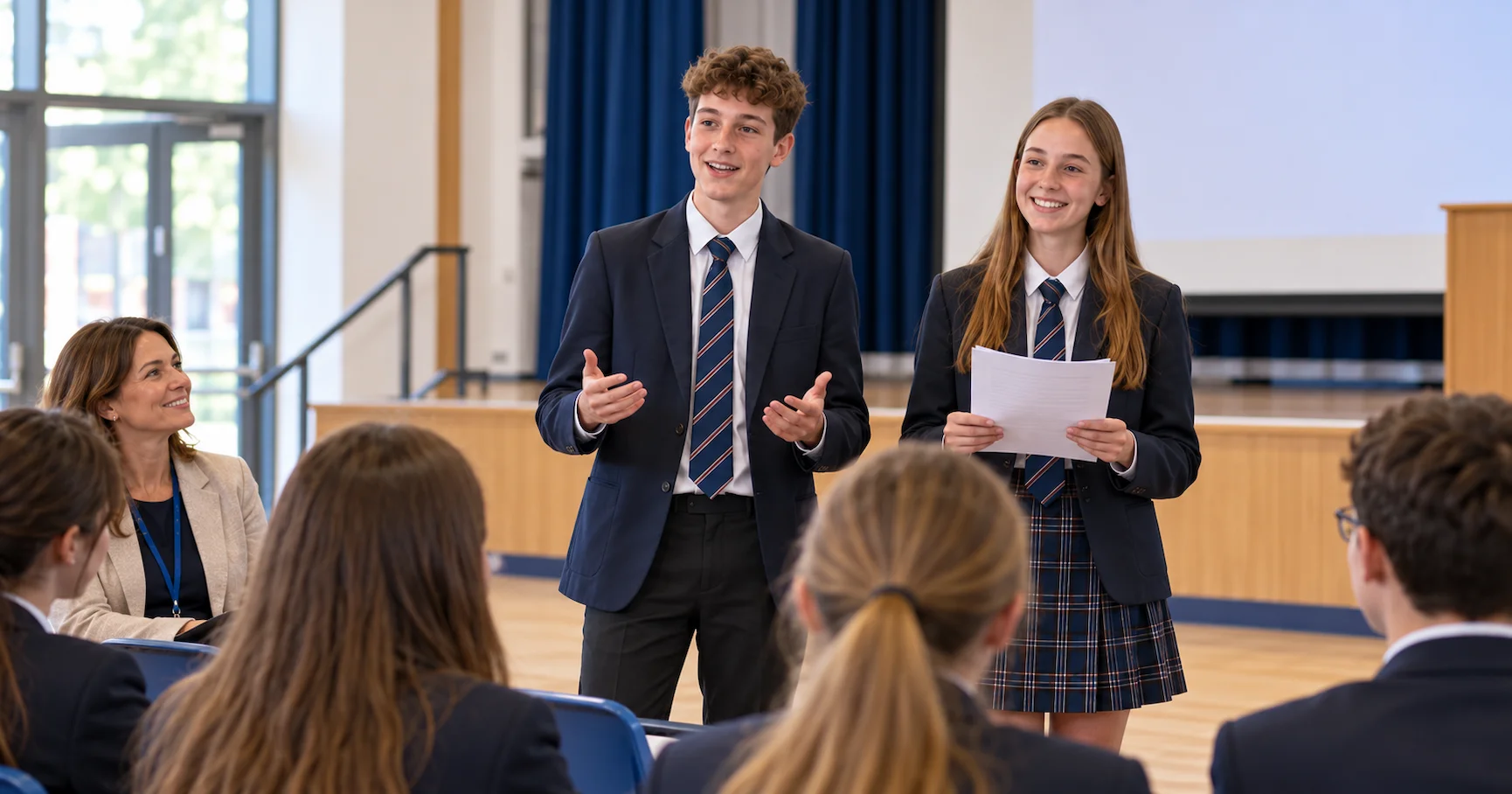
- Candidates may give a short speech to their class or year group
- A secret ballot is held, with paper voting slips or an online system
- Results are announced and the new representative takes up their role
Elections typically take place at the start of the academic year, with by-elections held if a representative steps down. Some schools hold elections each term to give more pupils the opportunity to serve.
What Can a Student Council Actually Do?
This is where expectations often need to be managed. A student council is a consultative body, not a decision-making one. The council can influence, recommend and advocate — but it cannot override school policy or management decisions. However, effective student councils have secured real, tangible changes in many English schools, including:
- Improvements to school meal options or canteen layout
- Changes to uniform policies (such as allowing more comfortable shoes or adding house-colour lanyards)
- Introduction of new clubs, activities or enrichment programmes
- Improvements to outdoor spaces and social areas
- Feedback that shaped new pastoral support approaches
What Are the Limits?
Student councils generally cannot influence:
- Staffing decisions (hiring, performance management, redundancy)
- Budget allocations beyond small designated funds
- Safeguarding decisions or disciplinary procedures
- Curriculum content (though they can express views on how subjects are taught)
A well-run student council is transparent about what is and is not within its remit. This prevents frustration and builds realistic expectations among the wider pupil body.
 AI-generated image
How Does Pupil Voice Connect to School Governance?
In some schools, the link between pupil voice and formal governance goes further than the student council. Governors are increasingly expected to engage with pupil perspectives, and some governing bodies include a designated pupil voice governor or regularly invite student council representatives to present at governor meetings.
This gives pupils a direct line to the people responsible for the strategic direction of the school, and it gives governors firsthand insight into how pupils experience school life — something that cannot be fully captured in data alone.
What Role Do Parents Play?
Parents do not typically attend student council meetings, but they can support their child's participation in several ways:
- Encouraging their child to stand for election or put forward ideas to their class representative
- Discussing school issues at home so pupils arrive at council meetings with a clear sense of what matters to their peers
- Asking the school's governing body or head teacher how pupil voice findings are acted upon
- Reviewing any published summaries of student council work in school newsletters or on the school website
If a school has a formal restorative approach to conflict, the student council may also play a role in embedding that culture — further connecting pupil voice to school behaviour and wellbeing.
Primary Versus Secondary: Key Differences
| Aspect | Primary School | Secondary School |
|---|---|---|
| Typical structure | 1 rep per class, teacher-led | Elected reps per form/year + executive officers |
| Meeting frequency | Half-termly or monthly | Fortnightly or monthly |
| Focus areas | School environment, playtime, events | Broader policy, curriculum feedback, wellbeing |
| Link to governors | Occasional presentations | More frequent formal links in many schools |
| Election process | Simple class vote | Formal ballot, candidate statements |
Frequently Asked Questions
Does every school in England have to have a student council?
There is no legal requirement for schools to have a student council specifically. However, schools are expected under the Ofsted framework and the Department for Education guidance on personal development to demonstrate that they actively seek and respond to pupil voice. Most schools meet this expectation in part through a student council, but the specific structure is left to the school.
Can a pupil be removed from the student council?
Yes. Schools typically have a process for removing a representative who is not fulfilling their responsibilities — for example, not attending meetings or not reporting back to their class. The process should be set out in the student council constitution or terms of reference. Removal is usually a matter for the staff liaison and senior leadership, not a pupil vote, though good practice involves transparency.
What is the difference between student voice and student council?
Student voice (or pupil voice) is the broad concept of listening to and acting on pupils' opinions. It encompasses surveys, focus groups, pastoral conversations, and informal feedback. The student council is just one formal mechanism through which pupil voice is captured. A school can have strong pupil voice without a traditional student council, and conversely, a student council can exist without meaningful pupil voice if it is purely performative.
How does Ofsted assess pupil voice during inspections?
Ofsted inspectors speak directly with pupils — in groups and individually — to understand their experience of school. They ask pupils whether they feel their opinions are listened to, whether they feel safe, and whether they are given meaningful opportunities to contribute to school life. They also review any evidence of how the school has responded to pupil feedback. A student council that produces no visible outcomes is unlikely to impress inspectors.
My child wants to stand for student council — what should they prepare?
Most schools ask candidates to prepare a short speech or written statement explaining why they want the role and what they would like to improve. Encourage your child to think about specific, realistic ideas rather than vague promises. Understanding the school's existing priorities — which can often be found in the school development plan or latest Ofsted report — will help them make a credible case. Being a good listener is at least as important as being a confident speaker.
What happens to student council ideas that the school cannot implement?
A well-run council will always receive a response to every proposal, even if the answer is no or not yet. Good practice is for the staff liaison to explain clearly why an idea cannot be implemented — whether due to cost, legal constraints, or school policy — and to log this formally. This transparency helps pupils learn that democratic processes involve compromise and evidence-based decision-making, not just getting whatever is asked for.