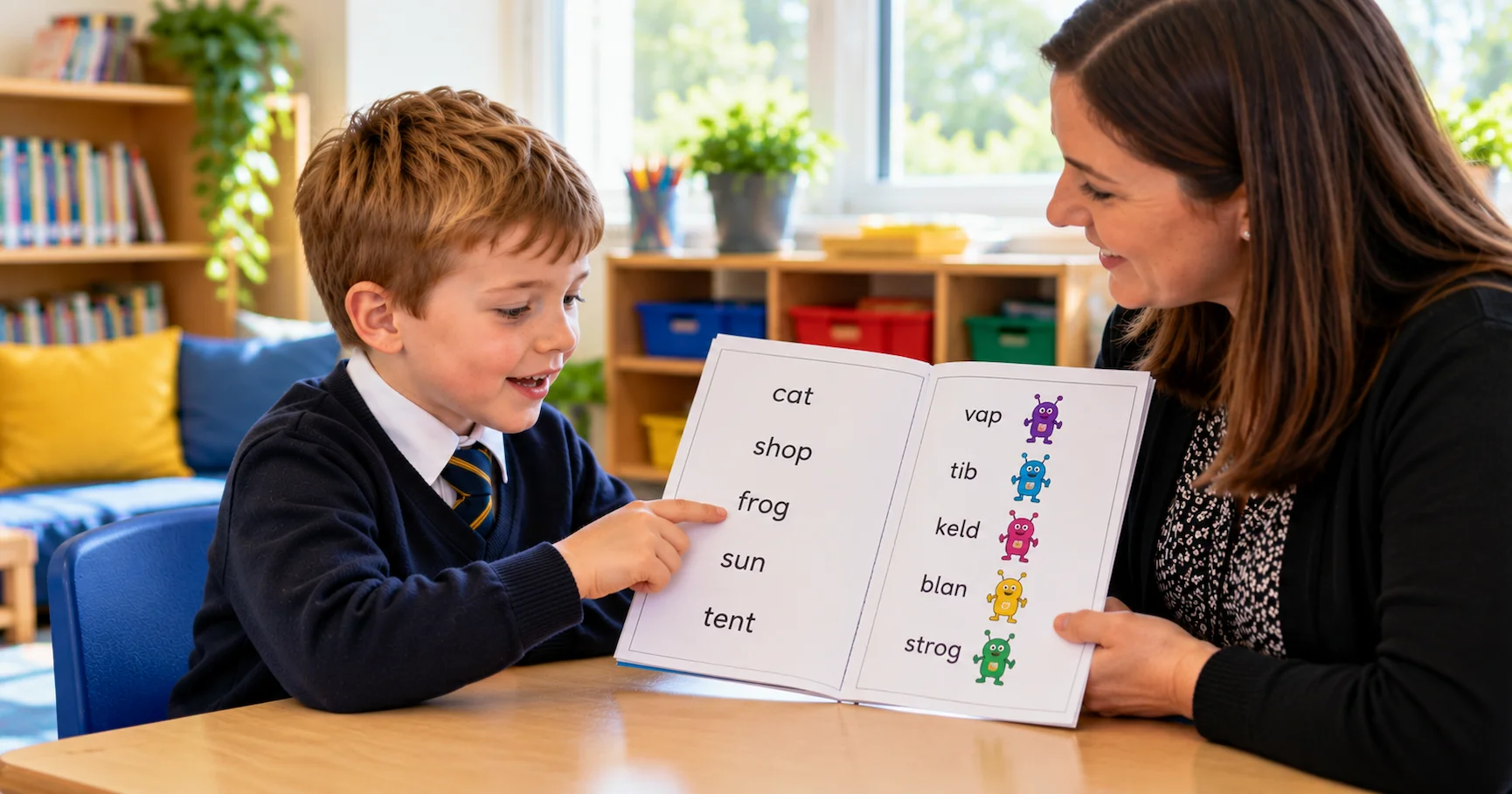
Every child in Year 1 at a state-funded school in England takes part in the Phonics Screening Check — a short, one-to-one assessment administered by the class teacher in June. It is not a test in the traditional sense: there is no written paper, no time pressure and no stress. But understanding what it involves, why pseudo-words are included, and how the results are used helps parents know both what to expect and how to support their child in the weeks leading up to it.
The check for the 2026–27 academic year will take place during the week of 9 June 2027. The threshold mark from the most recent check (June 2026) was 31 out of 40.
The Phonics Screening Check is a statutory assessment introduced in 2012. It is designed to assess whether a child has developed secure phonics decoding skills by the end of Year 1 — not to measure intelligence, reading comprehension or vocabulary. A child who does not meet the expected standard in Year 1 retakes the check in Year 2. The results help schools identify which children need additional phonics support, not which children are "behind" overall.
What Does the Check Involve?
The Phonics Screening Check consists of 40 words that the child reads aloud to a familiar teacher — usually their class teacher — in a quiet one-to-one setting. It takes approximately 5 to 10 minutes.
The 40 words are divided into two sections:
- Section 1 (words 1–20): Simpler words using letter-sound correspondences from Phases 2, 3 and 4 of phonics teaching. Includes CVC, CCVC and CVCC word structures (e.g. cat, shop, frog).
- Section 2 (words 21–40): More complex words using Phase 5 correspondences, alternative graphemes and longer words including some with two syllables.
Each section contains a mix of real words and pseudo-words (see below). The child reads each word and the teacher records whether it was read correctly.
What Are Pseudo-Words (Alien Words)?
Pseudo-words — sometimes called nonsense words or alien words — are phonetically regular made-up words: letter combinations that follow English spelling rules but have no meaning. Examples from past checks include words like vap, thazz, blurst and mib.
They are included because they prove the child is decoding — using their phonics knowledge to work out how to say a word — rather than recognising a word from memory. A child who has seen "cat" hundreds of times will recognise it by sight. But a word like "storp" can only be read correctly by applying phonics. If a child reads pseudo-words correctly, it demonstrates genuine phonics skill.
Each pseudo-word in the booklet appears next to a small picture of an alien or creature, signalling to the child that this is a made-up word and they should not try to turn it into a real word they know.
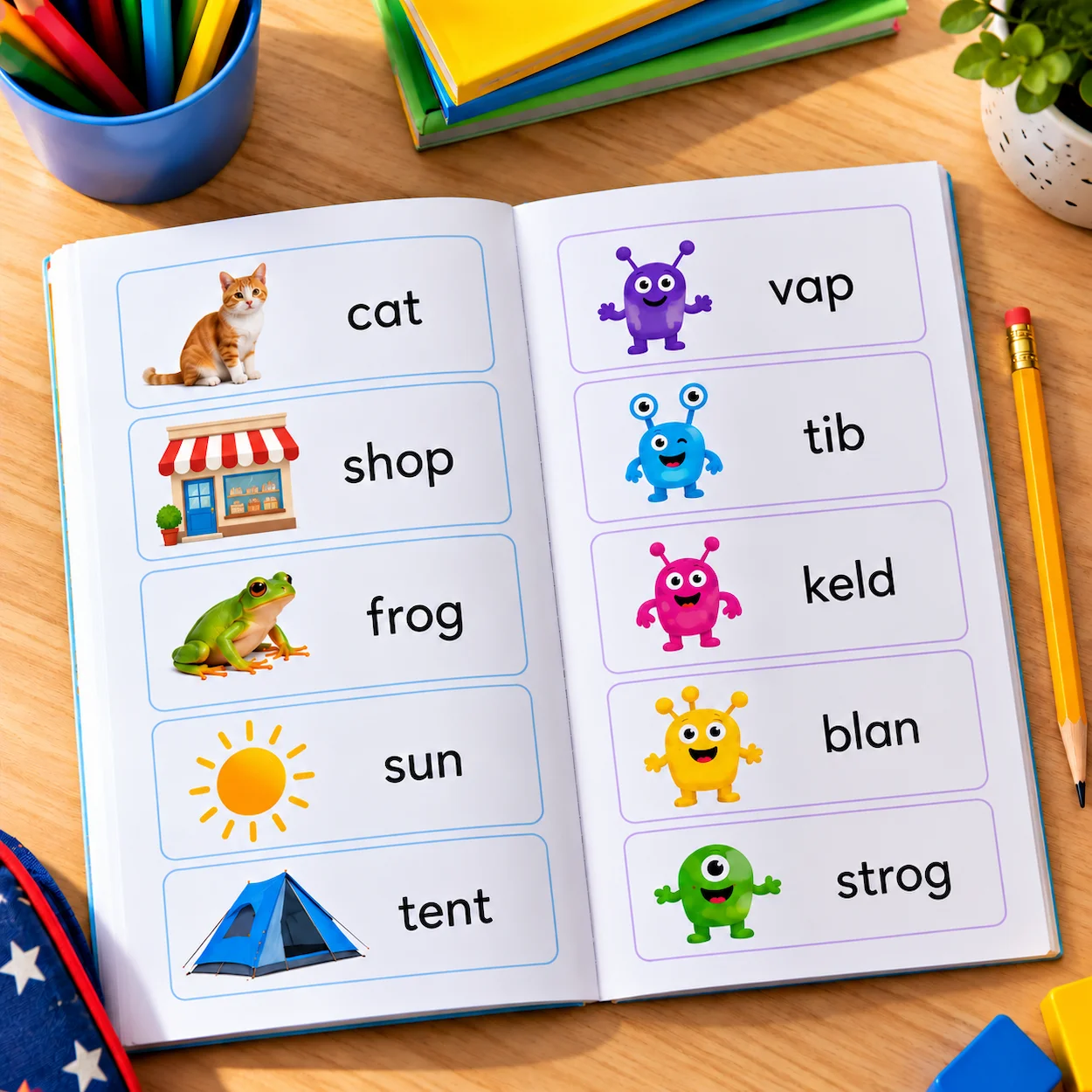 AI-generated image
The Pass Mark: What Score Does a Child Need?
The threshold mark is set by the Department for Education each year after the check results are analysed nationally. It is not fixed in advance.
| Year | Threshold (pass mark out of 40) |
|---|---|
| 2024 | 32 |
| 2025 | 32 |
| 2026 | 31 |
| 2027 | Set after June 2027 results |
A child who scores at or above the threshold is said to have met the expected standard. A child who scores below the threshold will retake the check in Year 2. Schools must report individual results to parents by the end of the summer term.
What Happens If a Child Does Not Meet the Standard?
If a child does not reach the threshold in Year 1, the school:
- Must inform parents of the result in writing
- Should provide additional targeted phonics support during Year 2
- Administers the check again during Year 2 (typically in the same June window)
Not meeting the Year 1 threshold is not a cause for serious concern on its own. Some children develop phonics skills slightly later than others, and the Year 2 retake exists precisely to give those children additional time and support. What matters is that the school responds with appropriate intervention — not simply waiting for the Year 2 retake without additional phonics teaching in between.
How Schools Prepare Children
Most primary schools in England teach phonics daily using a structured programme such as Read Write Inc, Little Wandle or Jolly Phonics. The Phonics Screening Check reflects what the curriculum teaches — children who have received consistent, systematic phonics teaching throughout Reception and Year 1 should be well prepared.
In the weeks before the check, some schools:
- Practise pseudo-word reading explicitly so children are not surprised by alien words
- Send home practice sheets or example booklets so parents can help at home
- Hold parent information evenings explaining the format
 AI-generated image
How Parents Can Help at Home
The most effective preparation is simply consistent daily reading of decodable books matched to the child's current phonics level — exactly what the school should already be encouraging. Beyond that, specific practice with pseudo-words is the most targeted thing parents can do:
- Play alien word games: Make up nonsense words together and take turns reading them aloud. "Can you read this alien's name — flimp? How about blurst?" This makes pseudo-word reading feel fun rather than strange.
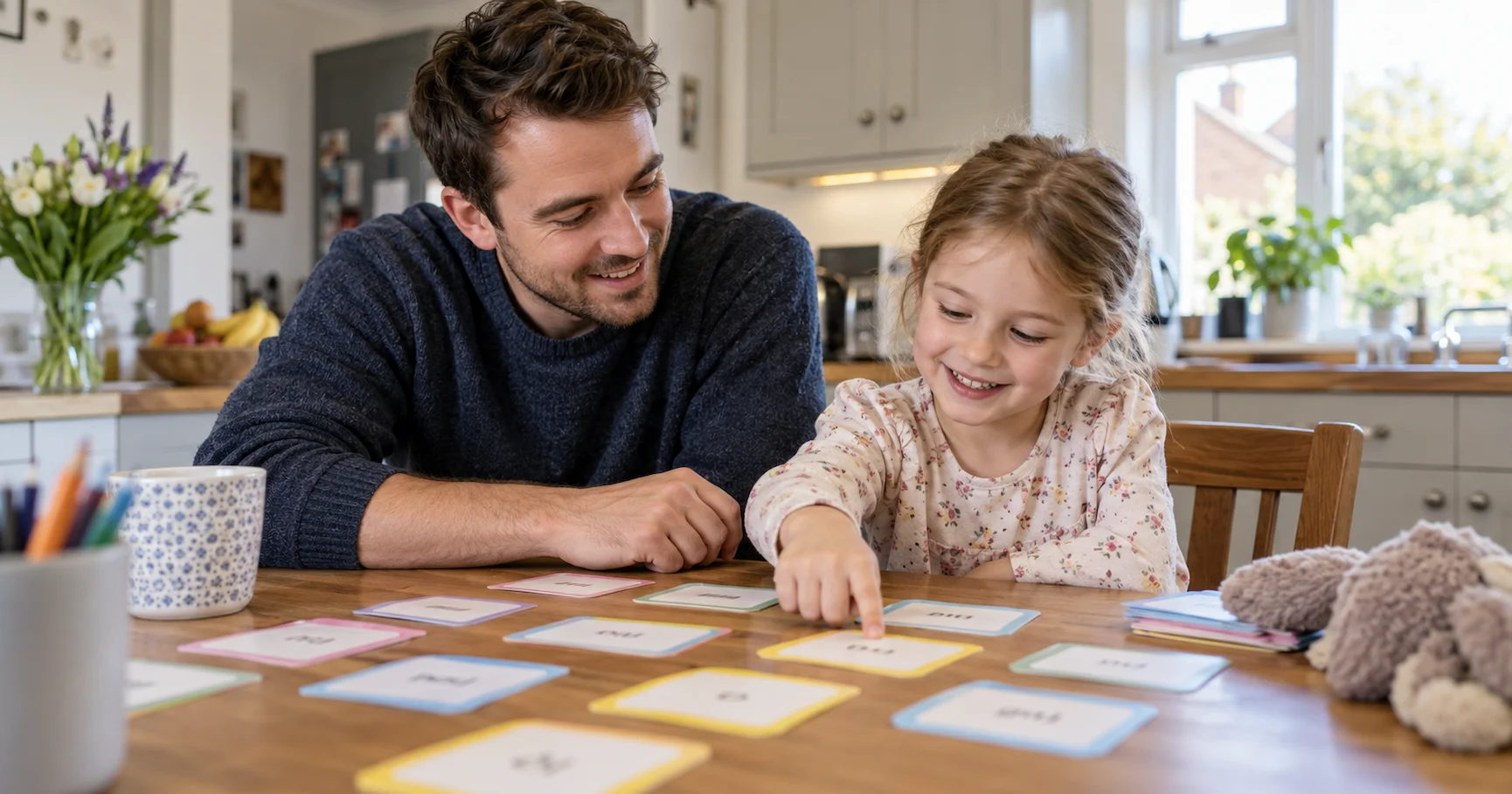
- Use phonics word cards: Write CVC, CCVC and CVCC words on card — both real and made-up — and practise reading them. Time how many the child can read correctly in 60 seconds for a game element.
- Do not coach specific words: The check uses words from an unpublished list. Trying to pre-teach specific words is not helpful and not possible. Focus on the phonics skills, not on memorising words.
- Keep it low-pressure: A child who is anxious will perform below their true ability. Reassure them that the teacher already knows how well they can read and is just listening to confirm what the school already knows.
For further ideas on practising phonics at home without buying extra resources, see the guide on phonics games using household objects. For guidance on choosing reading books at the right level, see how to choose a decodable reading book.
Frequently Asked Questions
Will my child know they are being assessed?
In most cases, yes — teachers are usually transparent that they are doing a reading check. However, the format (sitting one-to-one with the class teacher and reading words aloud) is something many Reception and Year 1 children do regularly as part of their phonics lessons, so it should not feel unfamiliar or intimidating. Schools are instructed to carry out the check in a relaxed, supportive manner. If your child is anxious, speak to the teacher — they can often reassure the child by explaining it as a reading chat rather than a test.
What if my child is absent during the check week?
The check window typically runs for two weeks (the official week plus the following week as a buffer). If a child is absent throughout, the school administers the check as soon as the child returns to school. There is no penalty for absence. The school will let you know when the check will be rescheduled.
My child has SEND — do they still take the Phonics Screening Check?
Yes, in most cases. The check is statutory for all Year 1 pupils. However, headteachers have discretion to disapply the check for individual pupils in exceptional circumstances — for example, a child with severe visual impairment for whom the standard format is not accessible, or a child with very significant learning needs for whom the assessment would not be meaningful. This is a decision made by the school, not parents, and requires prior notification to the local authority.
My child got a very high score. Does that mean anything special?
A high score confirms that your child has strong phonics decoding skills — which is excellent news for their reading development. However, the check does not differentiate between "good" and "very good" at the upper end: any score at or above the threshold is recorded as "met the expected standard". There is no separate grade or distinction for high scorers. Schools may provide more detailed commentary about individual strengths in their written communication to parents.
Does the result affect my child's school record or future assessments?
The Year 1 Phonics Screening Check result is recorded and shared with the school in Year 2 if the child does not meet the standard. If the child meets the standard in Year 1, no retake is needed and the result is simply a record of having passed. It does not form part of any formal school report that follows the child throughout their education. The main purpose is to prompt intervention where needed — not to create a lasting academic label.
When will I find out my child's result?
Schools are required to report Phonics Screening Check results to parents before the end of the summer term — typically in July. Results are often included in the child's end-of-year written report. The school must tell you whether your child met the expected standard, and if not, what support will be put in place in Year 2. If you want to know the score before the report is sent, you can ask the class teacher directly.