Few back-to-school purchases attract more parental indecision than school shoes. Too cheap and they fall apart by October. Too expensive and they have been outgrown by January. The wrong width and the complaints start on day two. And in between the fitting challenges, the playground demands, the wet weather and the uniform policy, the average British school shoe faces a remarkable amount of punishment for an item that most children wear for no more than a few months.
This guide compares the leading brands available to UK parents in 2025/26 — from premium specialist fitters to budget supermarket options — across the criteria that actually matter: comfort and foot health, durability, width fitting, and cost. We also cover the most important practical guidance on fitting correctly, what to look for in the shop, and how to get the most value from whatever you choose to buy.
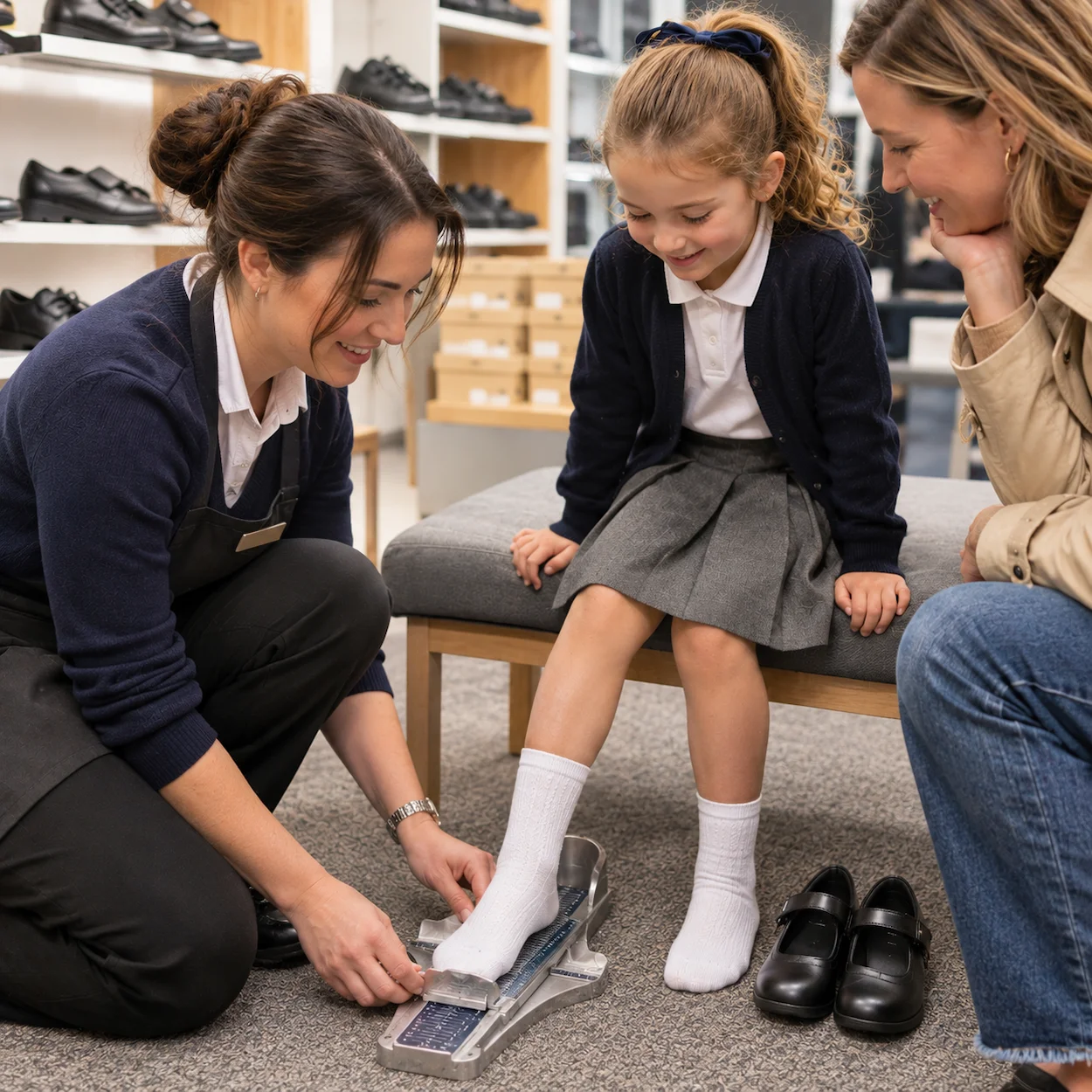
- Children's feet should be measured for both length and width — width is as important as length, and many UK children require a non-standard fitting
- Always measure feet in the afternoon — feet swell naturally throughout the day, and a shoe that fits at 9 AM may be uncomfortably tight by 2 PM
- Aim for 10–14 mm of growing room (roughly a thumb's width) in the toe box — not two full sizes, which causes the foot to slide forward and damages toes
- Signs your child needs a wide fit: red marks on the sides of the feet, blisters on the little toe, or visible bulging of the foot over the sole seams
- For primary school children, real leather uppers breathe significantly better than synthetic materials — an important consideration for feet that spend all day in activity
- School shoes are covered by standard consumer rights in the UK — if they fail within the first few weeks of normal use, you are entitled to a refund or replacement regardless of the retailer
The Most Important Factor: Getting the Fit Right
Before comparing brands and prices, it is worth emphasising that the single most important factor in school shoe satisfaction is correct fitting. The best shoe in the world in the wrong size will cause pain, blisters and potentially long-term foot problems. The most budget-friendly shoe in a correctly fitted size will serve most children adequately for a term.
Length and Growing Room
Clarks and most specialist children's shoe fitters recommend leaving approximately 10–14 mm of space between the end of the longest toe and the front of the shoe — roughly the width of an adult thumb pressed gently against the shoe while the child stands. This allows the foot to grow and the toes to splay naturally during walking and running.
One of the most common mistakes is buying two full sizes larger "to make them last longer." This backfires: a shoe that is too long causes the foot to slide forward with every step, putting pressure on the toes, wearing down the front of the sole unevenly, and potentially damaging the heel counter over time. Buy the correct fit and accept that children's feet grow.
Width: The Overlooked Dimension
Many UK parents focus entirely on length when choosing school shoes and overlook width — but the width of a child's foot varies considerably between individuals, and fitting a wide foot into a standard-width shoe is one of the most common causes of school shoe discomfort, blisters and foot problems.
The UK children's shoe width scale runs from E (narrow) through F/G (standard to wide) to H (extra wide). Clarks and Start-Rite are the brands that offer the most comprehensive multi-width fitting for children, with professional in-store fitters able to measure both dimensions and recommend the right combination.
Signs your child needs a wider fitting include:
- Red marks on the sides or tops of the feet after wearing
- Blisters or soreness on the little toe
- Complaints that shoes feel "tight" or "pinched" even in the correct length
- Visible bulging of the foot over the edge of the sole
When to Measure: Always in the Afternoon
Children's feet swell naturally over the course of the day. A shoe measured and fitted first thing in the morning may feel noticeably tighter by mid-afternoon — which is precisely when a child is most active at school, running around the playground. Always measure feet or try on shoes in the afternoon, not at a morning appointment, to ensure the fit accounts for this daily variation.
Brand-by-Brand Comparison (2025/26)
Clarks — Best for Range, Width Fitting and Primary Age
Clarks has been the default school shoe brand for generations of British families, and for good reason. Their combination of multi-width fitting (from narrow D to extra-wide H), professional in-store fitting service, and extensive range of styles makes them the most accessible premium option for parents who want to do the fitting properly.
Comfort: Clarks shoes are engineered with breathable leather linings, cushioned insoles and flexible soles designed to support the natural movement of a developing foot. They prioritise podiatric health and are widely recommended by children's foot health professionals.
Durability: Good to very good. Scuff-resistant toe caps and reinforced stitching mean most Clarks shoes hold up well for a full term under normal conditions. Very active children who play rough football on tarmac playgrounds may still wear through the soles before the end of the year.
Standout 2025/26 models: The Lock Magic (popular primary school Velcro style) and the Relda Wish Mary Jane range for girls.
Price range: approximately £45–£75.
Start-Rite — Best Overall for Durability and Foot Support
Start-Rite is the choice most consistently recommended by UK parenting communities — including Mumsnet — for families who want the highest build quality and the most robust shoe construction. Like Clarks, Start-Rite offers comprehensive multi-width fitting, but their standout proposition is the Rhino range: school shoes specifically engineered for children who destroy footwear.
Comfort: Excellent anatomical support. Start-Rite designs shoes to mirror the natural shape and movement of growing feet, with generous toe boxes and flexible soles that do not pinch or restrict.
Durability: Outstanding — particularly the Rhino range, which is built for rough playground use, football on tarmac, and generally heavy daily wear. The Rhino Sherman is Start-Rite's most talked-about model for very active children who routinely wear out shoes within a term.
Price range: approximately £50–£80. The premium over Clarks is justified if you have a child who is particularly hard on footwear.
Kickers — Best for Older Children and Legendary Durability
Kickers occupies a different market position from Clarks and Start-Rite. Rather than targeting primary school children with precision fitting, Kickers is the brand of choice for older primary and secondary school pupils who want a shoe with genuine street credibility alongside school-acceptable style. The brand's trademark triple-stitch, coloured tabs and chunky rubber sole are immediately recognisable on any UK secondary school corridor.
Comfort: Good, once broken in. The leather softens significantly with wear and the heel and ankle cushioning is substantial. The main caveat is that Kickers can feel stiff out of the box compared to lighter, more flexible children's shoes — they take a few days of wear to become comfortable.
Durability: Legendary. Kickers' heavy rubber soles and thick leather uppers routinely outlast the child's foot growth — many parents report that Kickers are the only school shoes that last more than one term for their teenager. The Kick Hi boot and Klapton styles are the most popular in 2025/26.
Width fitting: Kickers use standard sizing rather than multi-width fittings. They suit average to slightly wider feet best — children with genuinely narrow feet or very wide feet may find the fit less precise than Clarks or Start-Rite.
Price range: approximately £60–£85.
 AI-generated image
Geox — Best for Breathability and Wet Weather
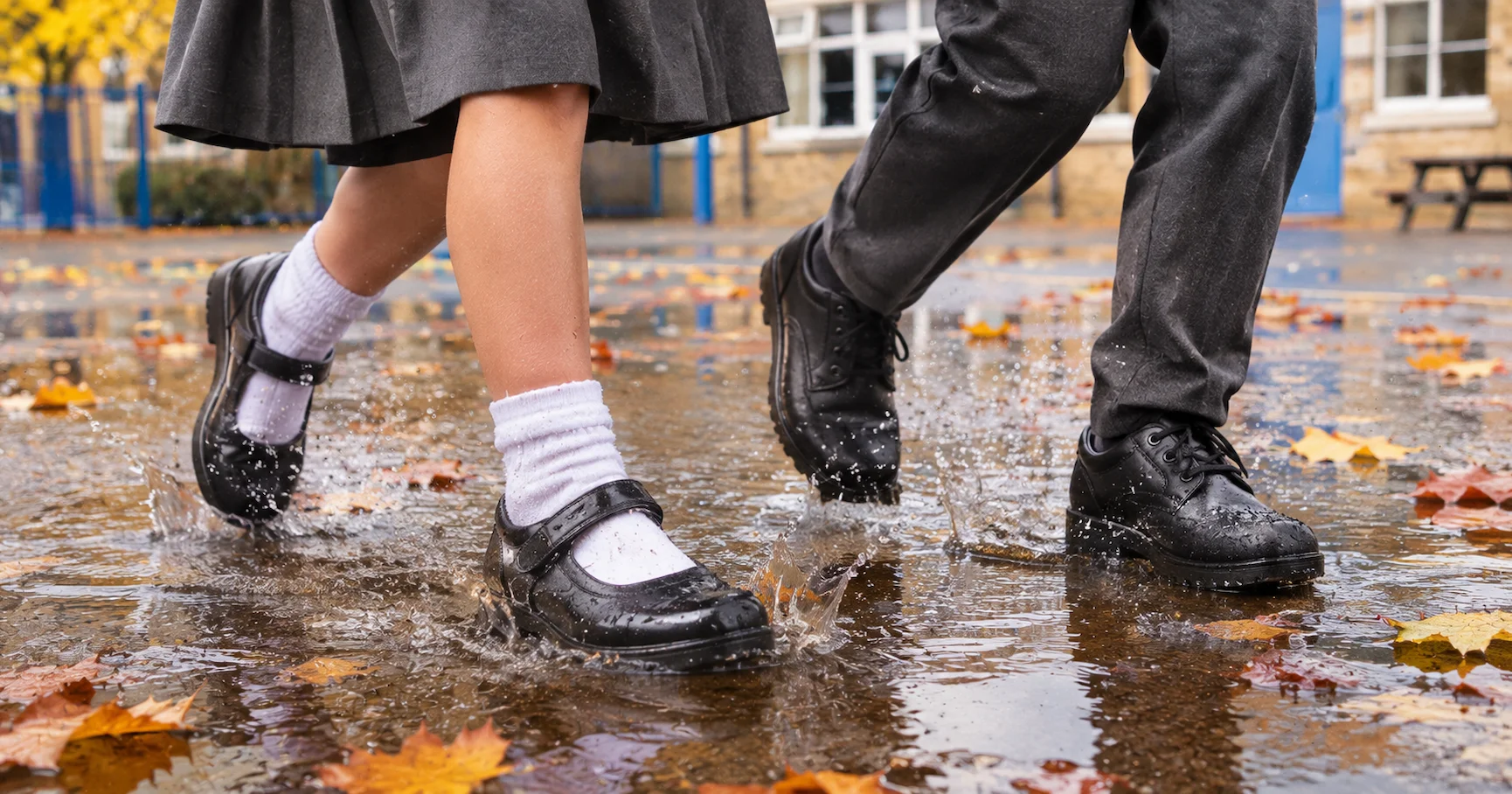
Geox has built its entire brand around a patented technology: a breathable, waterproof sole membrane that allows moisture to escape from inside the shoe while preventing water from entering from outside. For parents whose children come home with wet socks despite waterproof shoes being allegedly worn, Geox is worth the investment.
The New Savage Tex is one of the standout Geox models for school use in 2025/26, featuring a heavy-duty rubber toe bumper (a common source of first-to-fail damage on most school shoes) alongside the breathable membrane. Geox shoes tend to run in standard rather than multi-width fittings.
Price range: approximately £50–£75.
M&S — Best Value Mid-Range
Marks & Spencer's school shoe range offers a dependable mid-range option that sits between the supermarket budget lines and the premium specialist brands. M&S leather school shoes feature Freshfeet™ technology (an antimicrobial treatment that reduces odour — particularly welcome in summer term) and built-in growth indicators that help parents gauge when the child is approaching the end of the shoe's useful size range.
M&S shoes are widely available, straightforward to return, and hold up well for an average term of school use. They are a solid choice for families who want genuine leather construction without paying Clarks or Start-Rite prices.
Price range: approximately £30–£50.
Budget Options: Supermarkets and Value Brands
For families where cost is the primary consideration, the supermarket school shoe ranges have improved considerably in recent years. Asda George, Sainsbury's Tu and Tesco F&F all offer school shoes from approximately £10–£20, made from leather-look synthetic materials with basic cushioning.
The honest assessment is that supermarket school shoes will not last as long as premium leather equivalents, are not available in multi-width fittings, and breathe less effectively. However, for a child whose feet are growing rapidly (making expensive shoes impractical), for a second pair kept at school, or for families on a tight budget, they are a functional and widely used option.
ToeZone is a budget specialist brand worth knowing about — available online and through various UK stockists, ToeZone shoes feature printed size guides on the insoles and are designed with some attention to foot health at a price point significantly below the specialist brands (approximately £20–£35).
 AI-generated image
Leather vs. Synthetic: Which Should You Choose?
The material of the shoe's upper has a significant effect on both comfort and longevity — and it is worth understanding the tradeoffs before deciding how much to spend.
Real Leather
Real leather school shoes breathe significantly better than synthetic alternatives — an important practical point for children whose feet are active all day. Leather also moulds gradually to the shape of the individual foot over time, becoming more comfortable with wear rather than less. Well-maintained leather shoes (occasional polishing, waterproofing spray before the wet season) will last significantly longer than synthetic equivalents.
The downsides: leather costs more upfront and requires some maintenance. It also absorbs water in heavy rain unless treated, which is a meaningful consideration in the British climate.
Synthetic / Patent PU
Synthetic school shoes are cheaper and often easier to clean — patent styles in particular can be wiped clean instantly, which has genuine appeal for younger children. They are also highly water-resistant straight out of the box, without requiring waterproofing treatment.
The main drawback is breathability. Synthetic materials trap heat and moisture significantly more than leather, which can lead to sweaty, uncomfortable feet — particularly in warmer weather — and can accelerate foot odour. Under heavy playground use, synthetic uppers are also more prone to splitting or cracking at the flex points than leather equivalents.
The practical verdict: if budget allows, choose real leather uppers for primary school children who run around all day. For secondary school students who are more likely to walk than sprint and who take some care of their shoes, a high-quality synthetic or hybrid leather-synthetic construction is a reasonable compromise.
Which Fastening Should You Choose?
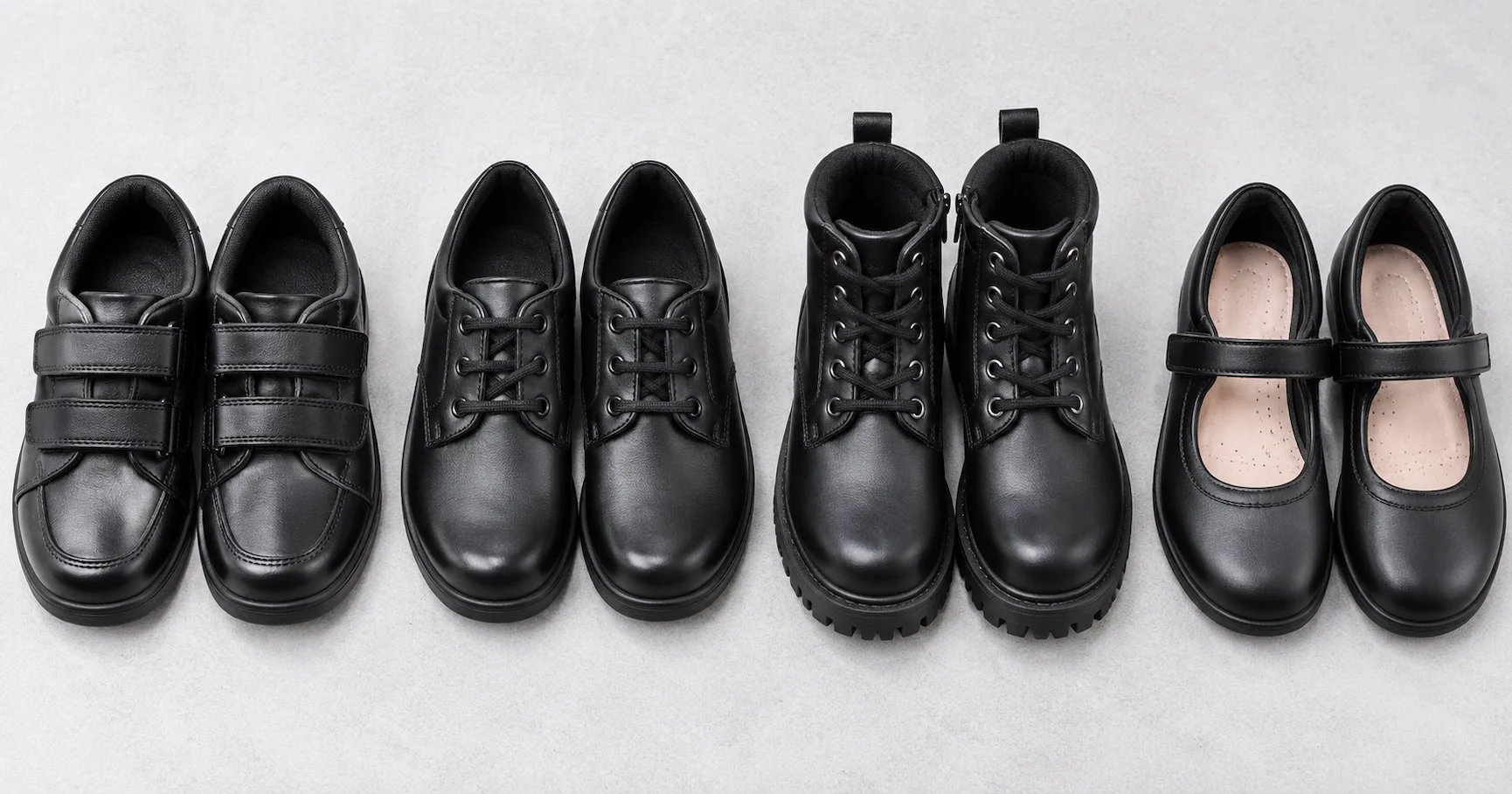
- Velcro (rip-tape) straps — the best choice for Reception and KS1 children. Quick, independently manageable, adjustable for different foot widths, and they provide a secure lockdown across the foot without requiring adult help. Most school uniform policies accept Velcro as a fastening
- Buckles — a smarter alternative to Velcro for older primary children who want a more polished look. Slightly slower to manage independently but more adjustable than a fixed lace
- Laces — suitable from Year 3 or 4 upwards, once children have reliably learnt to tie a bow. The key warning: laced shoes that are slipped on and off without being untied destroy the heel counter very quickly, causing the back of the shoe to collapse. If your child has laces, ensure they are actually untied and retied properly each day
Approximate Price Comparison (2025/26)
| Brand / Type | Price Range | Best For | Width Fitting? |
|---|---|---|---|
| Asda George / Tesco F&F / Sainsbury's Tu | £10–£20 | Budget; fast-growing feet | No |
| ToeZone | £20–£35 | Budget with some foot health focus | Limited |
| M&S | £30–£50 | Value mid-range; leather construction | Some styles |
| Clarks | £45–£75 | Primary; expert fitting; wide range | Yes (D–H) |
| Geox | £50–£75 | Breathability; wet weather | Standard |
| Start-Rite (standard) | £50–£75 | Durability; anatomical support | Yes (D–H) |
| Start-Rite Rhino | £60–£80 | Very active children; maximum durability | Yes |
| Kickers | £60–£85 | Older children; style + longevity | Standard |
Prices correct as of October 2026. All prices are approximate and may vary by style, retailer and seasonal sale.
Frequently Asked Questions
How often do primary school children's feet grow?
On average, primary school children's feet grow approximately two sizes per year in the early years, slowing to roughly one to one-and-a-half sizes per year by KS2. This means that a September purchase may need replacing by Christmas or the following spring, depending on the child's growth rate. It is worth checking the fit every six to eight weeks — press the toe box to feel whether the growing room is still adequate. If you can feel the toes pressing against the end of the shoe, it is time for a new pair regardless of how recently you bought the current ones.
Is it worth paying for an in-store fitting at Clarks or Start-Rite?
Yes — particularly for children under about age seven, whose feet are still developing and who cannot reliably describe how a shoe feels. A professional fitting measures both length and width accurately and matches the child to the right shoe construction for their foot shape. The fitting itself is free at Clarks and Start-Rite stores. The cost of the shoe is higher than supermarket alternatives, but the fitting service is not separately charged. For children with wide feet, narrow feet or any foot health concern, an in-store fitting is genuinely valuable.
Can I buy school shoes online to save money?
Yes — with some important caveats. Clarks, Start-Rite and M&S all offer online purchasing with home delivery, and their size guides are reliable if you have an accurate recent measurement. The key rules: only buy from retailers with free returns; try the shoes on indoors on a carpeted surface (not outdoors, where they cannot be returned if they have been worn); and measure your child's feet properly before ordering rather than guessing. If your child needs a non-standard width, in-store fitting is significantly more reliable than online ordering.
My child's school shoes wear out at the toe cap first. Is there anything I can do?
This is extremely common in primary school children and is caused by the dragging motion of running and scuffing on tarmac. There are several approaches: first, choose a shoe with a reinforced or rubber-capped toe from the outset — Start-Rite Rhino, Geox New Savage Tex and several Kickers styles all feature specific toe protection. Second, a cobbler can apply a rubber or leather toe cap repair for a few pounds before the damage reaches the leather itself, extending the shoe's life by weeks. Third, if the scuffing is severe and persistent, it may be worth accepting that you need a more durable shoe construction rather than trying to preserve a more delicate one.
My child has very wide feet. Which brands should I look at?
Clarks and Start-Rite are the two brands that offer the most comprehensive multi-width fittings for children with wide feet — both offer fittings from narrow (D/E) to extra wide (H). In-store fitting at either brand will measure your child's foot width accurately and recommend the right combination of length and width. For the widest feet, Start-Rite's G and H width fittings are often the most reliable option. Avoid brands that sell only in standard sizing (many fashion-led brands and supermarket shoes) if your child consistently shows signs of a poor width fit.
What are the school uniform rules around shoe styles?
School uniform policies on footwear vary between schools, but most English primary and secondary schools require plain black shoes — no visible logos, no trainers, no coloured details. Mary Jane styles, standard lace-ups, Velcro-strap shoes and plain black boots are generally acceptable. Kickers are widely accepted at secondary level, though a small number of schools have policies banning branded shoes. If in any doubt, check your school's specific uniform policy before purchasing — many schools publish their uniform requirements on their website. See our guide to school uniform in England for more on what schools can and cannot require.