When something goes wrong at your child's school — a bullying situation that has not been properly addressed, a disciplinary decision you believe is unfair, or a persistent failure to communicate — you have the right to make a formal complaint. All state-funded schools in England are legally required to have a published complaints procedure. Understanding how that procedure works, what each stage involves, and when you can escalate matters outside the school puts you in a much stronger position to resolve problems effectively.
External bodies — including the Department for Education (DfE) — will not investigate a school complaint until you have fully exhausted the school's own internal complaints procedure. This means working through every stage, from informal discussion right through to the governors' panel, before seeking outside help. Skipping stages or going external too early will result in your complaint being referred back to the school.
The Legal Framework: Who Must Have a Complaints Procedure?
The legal duty to maintain a complaints procedure applies to all state-funded schools in England:
- Maintained schools (community, voluntary aided, voluntary controlled, foundation): governed by Section 29 of the Education Act 2002, which places a legal duty on governing bodies to establish and publicise a procedure for handling all general complaints
- Academies and free schools: governed by the Education (Independent School Standards) Regulations 2014 (Part 7), which require academy trusts to have robust, multi-stage complaints procedures available to parents
- Independent (private) schools: also required to have a complaints procedure under the Independent School Standards
The procedure must be published — typically on the school website — and must be available to all parents on request. The DfE defines a complaint as an "expression of dissatisfaction however made, about actions taken or a lack of action." A concern — an expression of worry or doubt — is the stage before a formal complaint and is generally handled informally.
The Three Stages of a School Complaint
Most state schools in England use a three-stage model, designed to resolve issues as locally and quickly as possible. Each stage has a different contact, a different process, and different timescales.
| Stage | Who you contact | Format | Typical timescale |
|---|---|---|---|
| Stage 1 — Informal concern | Class teacher, Head of Year, Form Tutor | Phone call, email or informal meeting | 5–10 school days |
| Stage 2 — Formal complaint to Headteacher | Headteacher (or appointed senior staff) | Written complaint (email or letter) | 10–20 school days |
| Stage 3 — Governors' Complaints Panel | Clerk to the Governors / Chair of Governors | Written escalation + panel hearing | Typically 20–30 school days from receipt |
Stage 1: Raising an Informal Concern
The vast majority of school concerns are resolved at this stage and never become formal complaints. Contact the most relevant member of staff — your child's class teacher, form tutor or Head of Year — by phone, email or by arranging an informal meeting. Explain what has happened, what your concern is, and what you would like to happen differently.
Keep a note of the date, who you spoke to, and what was said or agreed. Even informal discussions should be documented on your side, in case the matter needs to be escalated later. If the concern relates directly to the Headteacher's own conduct or a decision made by the Head, you should go straight to Stage 2.
Stage 2: Formal Written Complaint to the Headteacher
If your informal concern is not resolved to your satisfaction, the next step is to put your complaint in writing to the Headteacher. Most schools ask that you do this within a specific window — typically within 3 months of the incident or of the informal stage failing to resolve it.
Your written complaint should clearly state:
- A factual, chronological account of what happened — dates, names, specific incidents
- What you raised informally, when, and with whom
- Why you remain dissatisfied with the outcome so far
- What specific resolution you are seeking
The Headteacher (or a senior staff member appointed to investigate) will look into the matter and issue a written response, typically within 10 to 20 school days. This response will either uphold your complaint, partially uphold it, or not uphold it — with reasons in each case.
 AI-generated image
A strong formal complaint is factual, specific and focused. Avoid generalised accusations. Instead of "the school doesn't care about my child," write "on [date], [teacher name] did not implement the agreed provision in [child's name]'s SEN Support Plan regarding [specific support]." Reference the school's own policies or statutory guidance where relevant. State clearly what outcome you want — an apology, a change in process, a review of a specific decision. Attach supporting evidence as numbered appendices. Keep it concise: a clear, well-structured two-page letter is more effective than a sprawling twelve-page narrative.
Stage 3: The Governors' Complaints Panel
If you remain dissatisfied after the Headteacher's written response, you can escalate the complaint to the governing body. Write to the Clerk to the Governors (or the Chair of Governors), stating that you wish to escalate to Stage 3 and explaining why the Stage 2 response did not resolve your complaint.
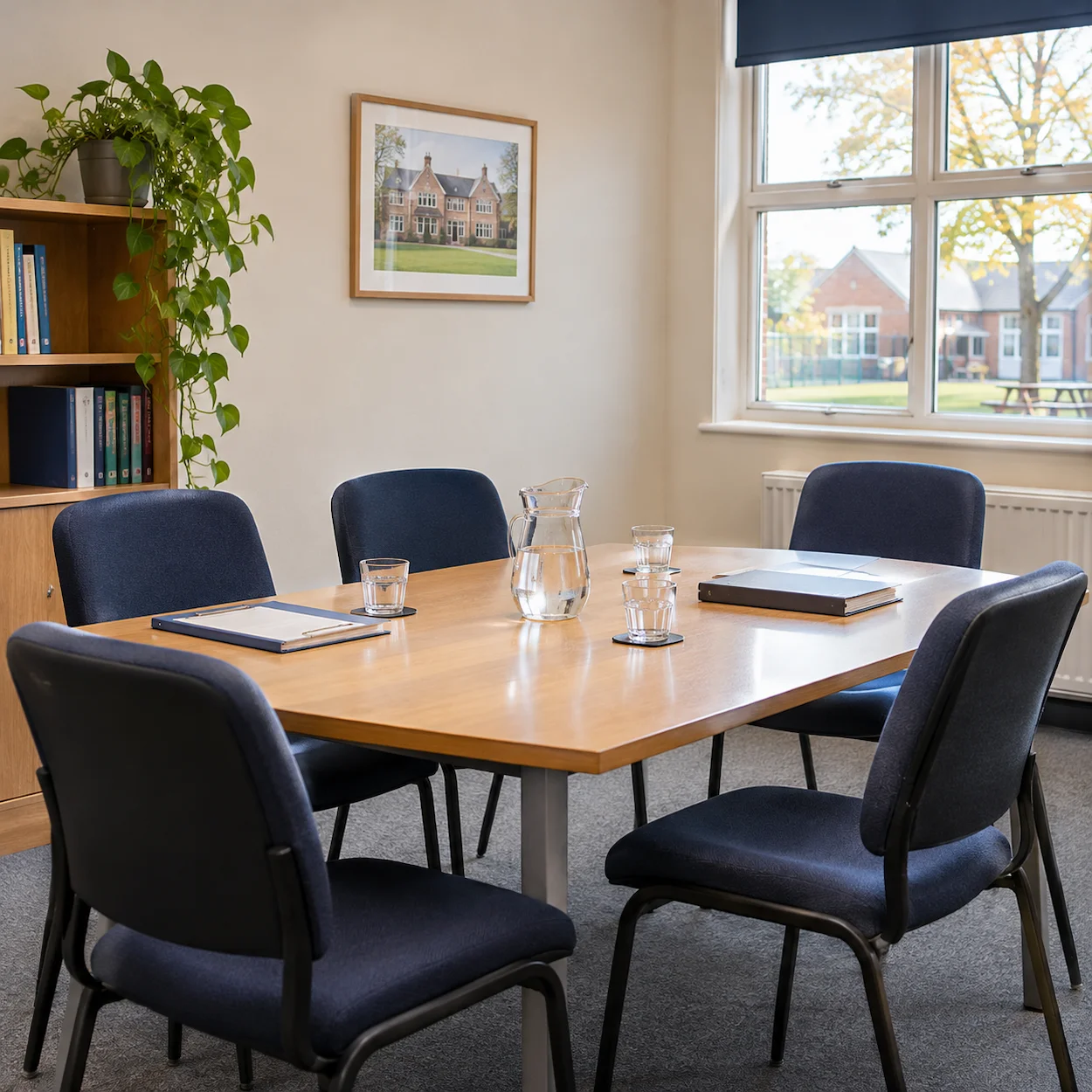
The school will convene a Complaints Appeal Panel — typically consisting of at least three people who have had no prior direct involvement in the complaint. For maintained schools, these are usually governors; for academies, at least one member of the panel must be independent of the management and running of the school.
 AI-generated image
The panel hearing process typically works as follows:
- Both you and the school submit written evidence to the Clerk in advance — there is a strict deadline; do not bring new evidence on the day without prior agreement
- At the hearing, both sides present their case and can be asked questions by the panel
- You have the right to bring a companion — a friend, partner or advocate — who may be permitted to speak on your behalf (check the school's policy)
- The panel deliberates in private after the hearing
- The panel's written decision — setting out its findings and any recommendations — is sent to you, the Headteacher and the governing body, usually within 10–15 school days of the hearing
The governors' panel decision marks the end of the school's internal complaints process. It is the final stage at school level.
After the Governors' Panel: External Escalation
If you have completed all three internal stages and remain dissatisfied, you may escalate the matter externally — but you must understand what external bodies can and cannot do.
The Department for Education (DfE)
For both maintained schools and academies, the DfE (via the ESFA for academies) is the principal external escalation route once the internal procedure is exhausted. Crucially, the DfE will not re-investigate the substance of your complaint or overturn the school's decisions. What it will do is check:
- Whether the school followed its published complaints procedure correctly and fairly
- Whether the school complied with its statutory duties
If the DfE finds that the school has broken the law or failed to follow statutory guidance, it can issue a formal direction requiring the school to put things right.
The Local Government and Social Care Ombudsman (LGSCO)
A common misunderstanding is that the Ombudsman can investigate individual school complaints. In England, the LGSCO does not have jurisdiction over maintained schools' internal management decisions — its remit covers Local Authority services, not individual schools' governing bodies. Similarly, the Parliamentary and Health Service Ombudsman does not routinely investigate individual school complaints. The DfE / ESFA remains the primary external route for school complaints.
What the Standard Complaints Procedure Does NOT Cover
Certain matters are explicitly excluded from the standard complaints procedure and must use separate statutory routes:
- School admissions: disputes over school places use the independent school admissions appeal panel — see the guide to school admissions in England
- Permanent exclusions: exclusion reviews are conducted by independent review panels, not the standard complaints procedure
- SEND disputes: disagreements about EHC Plans, provision or assessments go through the Local Authority and ultimately the SEND Tribunal — not the school's general complaints procedure
- Child protection and safeguarding: if a child is at immediate risk of harm, contact Children's Social Care or the Police directly
- Staff conduct and employment matters: complaints about a staff member's employment or disciplinary situation are handled through the school's HR and staffing policies
- Exam results: disputes about marking or grades go to the relevant awarding body or Ofqual
Practical Advice for Parents Making a Complaint
- Document everything from the start. Keep a log of every conversation: date, who you spoke to, what was said and what was agreed. Save all emails and letters.
- Stay calm and professional. Complaints that focus on facts and specific incidents are taken more seriously than those containing emotional language or personal attacks on staff. Panel governors are usually volunteers; they respond best to clear, evidence-based cases.
- Be clear about what you want. Schools and governing bodies find it much easier to respond when you state a clear desired outcome — an apology, a change to a procedure, a review of a specific decision.
- Read the school's complaints policy before you write. Note the specific timescales, deadlines and submission requirements for each stage. Failing to meet a submission deadline can complicate your case.
- Get independent support if needed. Your local SENDIASS service (if the complaint involves SEND), Child Law Advice, or a specialist education solicitor can help you understand whether your complaint has a strong basis and how to present it effectively.
Frequently Asked Questions
Do all schools in England have to have a complaints procedure?
Yes. All state-funded schools in England — including maintained schools and academies — are legally required to have a published complaints procedure. Maintained schools are governed by Section 29 of the Education Act 2002; academies by the Education (Independent School Standards) Regulations 2014. The procedure must be available on the school website and provided on request. Independent schools also have a legal duty to have a complaints procedure under the Independent School Standards.
How long does a school complaints procedure take?
Timescales vary by school policy, but a typical complaint from first formal submission to governors' panel decision takes between six and twelve weeks in total. Stage 2 (Headteacher response) usually takes 10–20 school days. Stage 3 (governors' panel) adds further time for scheduling the hearing and issuing the written decision. Schools must follow the timescales in their own published policy; failure to do so is relevant if you escalate to the DfE.
Can I go straight to the governors without speaking to the Headteacher first?
Generally, no. The three-stage model requires you to attempt resolution at each stage before escalating. However, if your complaint is specifically about the Headteacher's own conduct or a decision made directly by the Head, you may skip Stage 2 and go directly to the governors (Stage 3). Always check your school's specific complaints policy.
What can I do if the school does not respond within the stated timescales?
Write to the Clerk to the Governors noting the missed deadline and asking for an update and revised response date. Keep a record of this. If the school continues to fail its own timescales, this constitutes maladministration and can be noted when you escalate to the DfE — external bodies look at how the procedure was followed, including whether timescales were met.
Can I take a friend or supporter to the governors' panel hearing?
Yes. Parents have the right to bring a companion to the governors' panel hearing — a friend, partner, family member or advocate. Check your school's complaints policy to see whether your companion can speak on your behalf or provide support only. Professional legal representatives such as solicitors may be limited or excluded by some schools' policies; check in advance.
What happens if the governors' panel does not resolve my complaint?
Once you have exhausted all internal stages — including the governors' panel — you can escalate to the Department for Education (DfE). For academies, this is handled via the Education and Skills Funding Agency (ESFA). The DfE will not reinvestigate or overturn the school's decisions; it will check whether the school followed its own procedure correctly and complied with statutory duties. If a statutory duty was breached, the DfE can issue a formal direction. The DfE is not an appeal body for the content of school decisions.